
Top 10 ACMI Airlines in Europe: A Complete Guide to Leading Wet Lease Operators


The European ACMI Operators Airlines Actually Use
European airlines use ACMI operators to add aircraft capacity without waiting for fleet deliveries, recruiting additional crews or absorbing another aircraft into their own technical organization.
The requirement can be seasonal, operational or strategic. An airline may need several Airbus A320-family aircraft for a summer schedule, a Boeing 737-800 to cover an AOG event, an Embraer E190 for regional capacity or an Airbus A330 for long-haul flying.
Under an ACMI agreement, the lessor provides the aircraft, crew, maintenance and insurance. The lessee buys usable capacity rather than simply taking possession of an aircraft. For a deeper look at the commercial structure, see our ACMI lease pricing analysis .
The ranking below focuses on operators with a current European ACMI business, identifiable operating fleets and demonstrated wet-lease activity. It is an editorial ranking rather than a fleet-size league table because the right provider depends heavily on aircraft type, geography, timing and mission.
Selecting an ACMI Provider
Fleet Size Alone Does Not Determine the Best Operator
Avion Express may be a natural candidate for an airline needing multiple A320-family aircraft. Hi Fly occupies a different segment with widebody Airbus capacity. German Airways focuses on the Embraer E190, while Sevenair serves smaller regional missions.
Start with the aircraft requirement, induction date, operating base, monthly block hours, contract period and regulatory constraints. Then identify operators with a fleet and operating model that actually match the mandate.
Top 10 European ACMI Airlines
| Rank | Operator | Core Aircraft | Best Fit |
|---|---|---|---|
| 1 | Avion Express | Airbus A320 family | Large narrowbody ACMI programs |
| 2 | Hi Fly | A320, A330, A340 | Widebody and long-haul ACMI |
| 3 | GetJet Airlines | A320, A321, 737 NG | Short and long-term narrowbody ACMI |
| 4 | KlasJet | Boeing 737-800 | 737 capacity and rapid deployment |
| 5 | AirExplore | Boeing 737-800 | European seasonal ACMI |
| 6 | ASL Airlines Ireland | A330, A300, 737, ATR | Cargo and contract ACMI |
| 7 | German Airways | Embraer E190 | Regional jet capacity |
| 8 | Swiftair | ATR and cargo aircraft | Regional passenger and cargo ACMI |
| 9 | Sevenair | Regional turboprops and light aircraft | Small regional ACMI missions |
| 10 | White Airways | A320, 737, 777 | Flexible passenger wet lease |
1. Avion Express
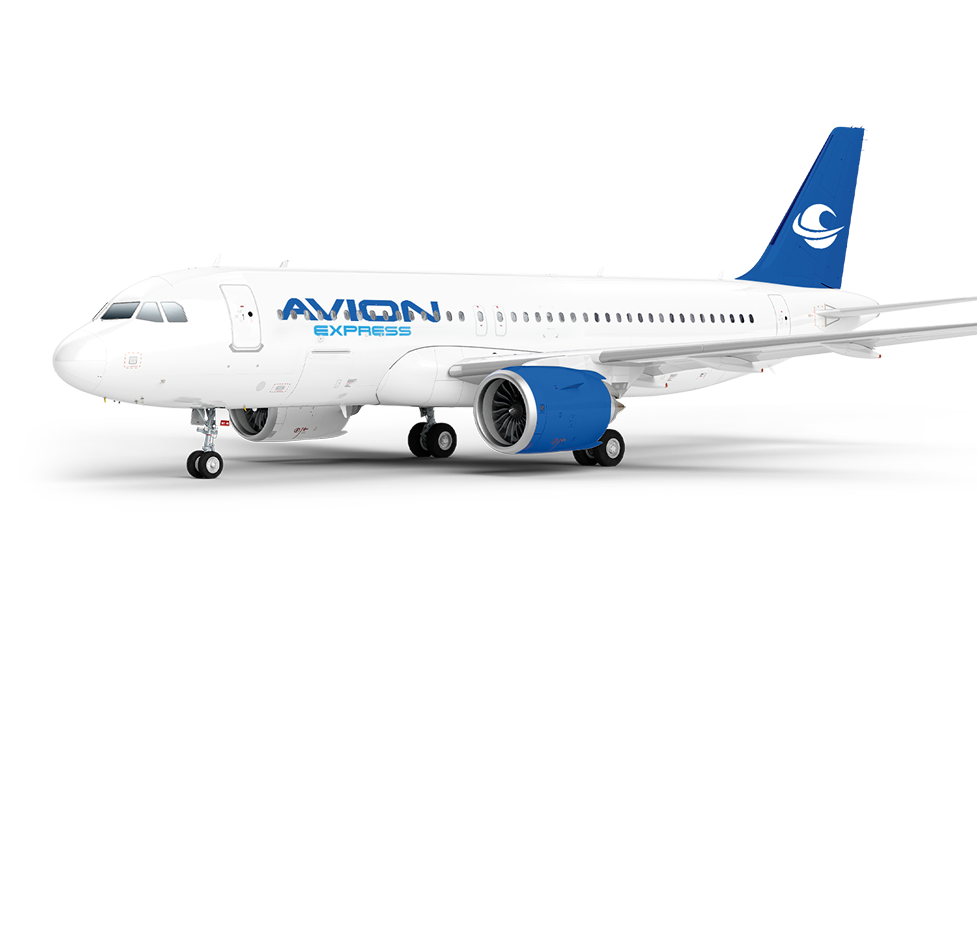
Avion Express remains one of the largest dedicated passenger ACMI platforms headquartered in Europe.
The company describes itself as an airline for airlines and currently reports more than 50 Airbus A320-family aircraft, over 17 operating bases and deployments across five continents.
This scale makes Avion Express particularly relevant where a customer needs several narrowbody aircraft rather than one isolated wet lease. Airbus fleet commonality also matters to airlines already operating the A320 family.
The operator is positioned around seasonal demand, route expansion and operational disruptions. Airlines specifically seeking this aircraft family can also review our Airbus A320 ACMI leasing page.
2. Hi Fly
Lisbon-based Hi Fly occupies a different part of the ACMI market. Its principal strength is widebody wet lease rather than large-scale narrowbody deployment.
Hi Fly currently operates an all-Airbus fleet including A320, A330 and A340 aircraft. The A330 and A340 make it particularly relevant to airlines requiring long-haul capacity that cannot be covered with a conventional European narrowbody ACMI provider.
During the first half of 2026, Hi Fly reported operations at 74 airports across 41 countries and territories on six continents. Its customers include airlines, governments, tour operators, freight forwarders and other institutional aviation users.
Hi Fly should be high on the shortlist when the requirement involves an A330-class widebody, long-haul replacement capacity or an international operation requiring a provider accustomed to moving aircraft between regions.

3. GetJet Airlines
GetJet Airlines is a Lithuanian IOSA-registered ACMI and charter airline operating Airbus and Boeing narrowbody aircraft.
Its current published fleet consists of Airbus A320s, an A321 and Boeing 737 NG aircraft. That mixed fleet gives the company a broader aircraft proposition than an operator committed exclusively to one narrowbody type.
GetJet's commercial credibility is also visible in active airline relationships. In 2026 it entered a long-term ACMI partnership with Eurowings, part of Lufthansa Group, with six GetJet aircraft scheduled to support Eurowings operations from Hamburg.
GetJet is consequently worth considering for both short-term capacity requirements and multi-aircraft seasonal or longer-term programs.

4. KlasJet
KlasJet ACMI operates a dedicated Boeing 737-800 ACMI platform alongside the company's better-known VIP aviation activities.
KlasJet currently advertises eight Boeing 737-800 NG aircraft in ACMI service with 186- or 189-seat configurations. Its proposition is deliberately focused on capacity deployment rather than fleet diversity.
The company also markets AOG coverage and states that available aircraft can be mobilized on short notice, making it relevant where a carrier suddenly loses capacity and needs a narrowbody replacement.
Operators handling these kinds of disruptions should also review our short-term aircraft lease for AOG replacement coverage.
5. AirExplore
Bratislava-based AirExplore is Slovakia's largest airline and a focused Boeing 737-800 ACMI and passenger-charter operator.
Its standardized 737-800 fleet can be attractive to airlines that want predictable narrowbody capacity without introducing an unfamiliar aircraft category into the commercial schedule.
AirExplore remains active in the 2026 European wet-lease market. It extended its partnership with Enter Air for the 2026 summer season, deploying two 189-seat Boeing 737-800s from Katowice.
Its own EASA Part-145 maintenance capability is also commercially relevant for customers assessing how much technical support sits behind the ACMI proposition.
6. ASL Airlines Ireland
Dublin-based ASL Airlines Ireland should be viewed primarily through the cargo and contract-aviation lens.
The airline operates around 40 aircraft across Boeing 737, Airbus A300, Airbus A330 and ATR families and has aircraft and crew bases across multiple European countries.
Its customers include major express-parcel integrators and global online retailers. The airline provides long- and short-term contract flying, ACMI solutions, full charter and related project-management services.
ASL therefore belongs on a different shortlist from passenger-focused A320 operators. It becomes particularly important when the requirement involves freighter capacity, cargo networks or a longer contract built around logistics rather than seasonal passenger traffic.
7. German Airways
German Airways occupies an important regional-jet niche with an Embraer E190 fleet.
Instead of competing directly with 180- to 189-seat A320 and Boeing 737 ACMI operators, German Airways provides capacity at a smaller gauge that can fit thinner routes and regional airline networks more naturally.
The company expanded its E190 fleet again for the 2026 summer schedule and continues to operate scheduled services on behalf of other airlines as well as charter flying.
It is particularly relevant when the commercial requirement calls for roughly 100-seat regional jet economics rather than a full-size European narrowbody.
8. Swiftair
Madrid-based Swiftair combines cargo and passenger aviation and has longstanding experience operating aircraft on behalf of other airlines.
Its passenger business includes ATR 72 operations, while the wider group has substantial experience in overnight express and cargo flying.
Swiftair explicitly offers ACMI, wet lease, damp lease and full charter structures. That makes the company useful where the client needs something more customized than a conventional all-in passenger wet lease.
Cargo customers should pay particular attention to Swiftair because available freighter capacity can be deployed around express, pharmaceutical, perishables and other time-sensitive logistics requirements.
9. Sevenair
Portugal-based Sevenair is relevant where the ACMI requirement falls below conventional regional-jet or narrowbody size.
Its ACMI fleet is built around smaller pressurized and non-pressurized aircraft carrying approximately 8 to 19 passengers, with some aircraft capable of carrying roughly 900 to 2,000 kg of cargo.
Sevenair markets both short- and long-term ACMI solutions across Europe, the Middle East and Africa and has experience working with governments, tour operators, airlines and brokers.
It is therefore a specialist option for thin regional routes, government missions, small-group transport and remote-airport requirements rather than a direct substitute for an A320-family ACMI aircraft.
10. White Airways
White Airways is a Portuguese ACMI, wet-lease, charter and aircraft-management operator within the Omni Aviation Group.
White's current published operating proposition includes Airbus A320, Boeing 737 and Boeing 777 equipment, giving it the ability to discuss both narrowbody and larger-aircraft passenger requirements.
The operator is IATA affiliated, IOSA certified and maintains its own continuing-airworthiness capabilities within the operating organization.
White is smaller than the largest European ACMI platforms, but that can make it relevant for bespoke wet-lease mandates where the customer values a flexible Portuguese operator within a wider aviation group.
Match the Operator to the Mission
The European ACMI Market Is Several Markets at Once
Comparing Hi Fly with Sevenair purely by fleet count is not especially useful. They serve fundamentally different capacity requirements.
A more useful segmentation is widebody, narrowbody, regional jet, regional turboprop and cargo ACMI. The aircraft and network requirement should determine the candidate list before price negotiations begin.
| Requirement | Operators to Examine |
|---|---|
| A320-family passenger capacity | Avion Express, GetJet Airlines |
| Boeing 737-800 capacity | KlasJet, AirExplore, GetJet Airlines |
| Widebody long-haul | Hi Fly |
| Regional jet | German Airways |
| Regional turboprop | Swiftair, Sevenair |
| Cargo ACMI | ASL Airlines Ireland, Swiftair |
Why European Airlines Use ACMI
The strongest ACMI use cases normally involve a mismatch between the capacity an airline needs and the aircraft it can operate itself during a particular period.
Summer seasonality is an obvious example. An airline may need several additional narrowbody aircraft from April through October but have no economic reason to carry those aircraft and crews through the winter.
Technical disruption creates a different problem. Engine removals, unscheduled maintenance and delayed aircraft deliveries can create an immediate gap between the published schedule and available fleet.
New routes provide another use case. An airline can deploy ACMI capacity before making the longer-term commitment required to acquire or dry lease additional aircraft.
See our analysis of seasonal demand and ACMI leasing and why airlines are turning to ACMI in 2026 for the wider capacity-market context.
ACMI vs Dry Lease vs Damp Lease
These structures allocate operational responsibility differently. They should not be treated as interchangeable aircraft-rental products.
| Structure | Aircraft | Crew | Maintenance | Insurance |
|---|---|---|---|---|
| ACMI / Wet Lease | Lessor | Lessor | Lessor | Lessor |
| Dry Lease | Lessor | Lessee | Lessee / agreed structure | Lessee / agreed structure |
| Damp Lease | Lessor | Split under contract | Defined by contract | Defined by contract |
For a more detailed comparison, see wet lease vs dry lease and our overview of aircraft leasing structures .
Regulatory Due Diligence
A Cheap ACMI Quote Is Irrelevant if the Operation Cannot Be Approved
Aircraft registration, operator AOC, crew licensing, maintenance approvals, insurance, operating specifications and wet-lease authorization all have to fit the proposed operation.
Cross-border wet leasing can introduce additional regulatory scrutiny. Airlines should determine approval requirements before committing the schedule to an aircraft simply because the commercial proposal looks attractive.
What to Compare Before Choosing an ACMI Airline
Aircraft Availability
Confirm the exact aircraft, induction date and duration rather than relying on a generic fleet presentation.
Fleet Type
Aircraft gauge, seating, configuration, range and compatibility with the proposed schedule.
AOC and Approvals
Confirm that the operator and aircraft can legally perform the required operation in the relevant jurisdictions.
Maintenance Support
Understand where maintenance will be performed and how technical disruption will be handled during the contract.
Crew Plan
Review crew bases, rotations, accommodation assumptions and resilience during disruption.
Commercial Terms
Compare minimum guaranteed hours, block-hour pricing, positioning, crew costs and excluded operating expenses.
ACMI Contract Terms Matter as Much as the Hourly Rate
Comparing two ACMI quotes solely on price per block hour can produce a misleading answer.
Minimum guaranteed hours, positioning costs, crew accommodation, fuel assumptions, airport charges, navigation charges, maintenance-related substitution rights and cancellation provisions can materially alter the all-in economics.
Maintenance and operational responsibility also need clear allocation. Our aircraft maintenance reserves analysis covers one of the recurring financial issues in aircraft lease transactions.
Airlines preparing a short-term procurement process should also review how to structure an ACMI RFP before approaching the market.
Wider Market
Need Providers Outside Europe?
European operators represent only part of the global wet-lease market. For a wider comparison across regions, see ACMI World's Top 20 ACMI Operators in the World in 2026 .
ACMI World Assessment
Build the Shortlist Around the Aircraft Requirement
Avion Express is one of the strongest starting points for large Airbus narrowbody requirements. Hi Fly is the obvious specialist to examine for widebody ACMI. GetJet, KlasJet and AirExplore provide credible narrowbody alternatives, while German Airways, Sevenair, Swiftair and ASL serve more specialized capacity segments.
The best provider is the operator that can deliver the correct aircraft, on the required date, under an approvable operating structure and at an all-in cost that works across the full contract period.
European ACMI Airlines FAQ
What are the largest ACMI airlines in Europe?
Avion Express is one of Europe's largest narrowbody ACMI platforms, while Hi Fly is a major specialist in widebody wet leasing. Other significant European operators include GetJet Airlines, KlasJet, AirExplore and ASL Aviation group airlines.
Which European ACMI airlines operate Airbus A320 aircraft?
Avion Express and GetJet Airlines are among the principal European ACMI operators using Airbus A320-family aircraft. Hi Fly also operates Airbus narrowbody equipment alongside its widebody fleet.
Which ACMI airlines operate Boeing 737-800 aircraft in Europe?
KlasJet and AirExplore operate dedicated Boeing 737-800 ACMI fleets, while GetJet Airlines also operates Boeing 737 NG aircraft.
Which European ACMI operator offers widebody aircraft?
Hi Fly specializes in widebody wet leasing and currently operates Airbus A330 and A340 aircraft alongside A320-family equipment.
Which European ACMI operator uses Embraer E190 aircraft?
German Airways operates Embraer E190 aircraft and is particularly relevant where an airline needs regional-jet capacity below standard A320 or Boeing 737 gauge.
Which European ACMI companies provide cargo capacity?
ASL Airlines Ireland is a major cargo ACMI and contract operator. Swiftair also has substantial cargo experience, particularly in express and time-sensitive freight operations.
Is ACMI the same as wet lease?
ACMI is the standard full wet-lease structure in which the lessor provides the aircraft, crew, maintenance and insurance. Individual contracts still need to define the remaining commercial and operational responsibilities.
How quickly can an airline obtain ACMI capacity?
It depends on aircraft availability, regulatory approvals, crew positioning and the complexity of the operation. Some operators market rapid AOG deployment, while larger seasonal programs are generally arranged considerably earlier.
How are ACMI leases priced?
ACMI transactions commonly use a block-hour rate combined with a minimum guaranteed utilization. Positioning, fuel, airport charges, navigation, crew accommodation and other costs may sit outside the core ACMI rate depending on the contract.
What should an airline send when requesting an ACMI quote?
Provide the aircraft type or capacity requirement, number of aircraft, induction date, base, operating region, expected monthly block hours, contract duration and any important registration or regulatory requirements.