
Private Jet Leasing for Artist Tours
Private Jet Leasing for Artist Tours requires disciplined structuring, cost control, and lender-ready planning to keep schedules tight.

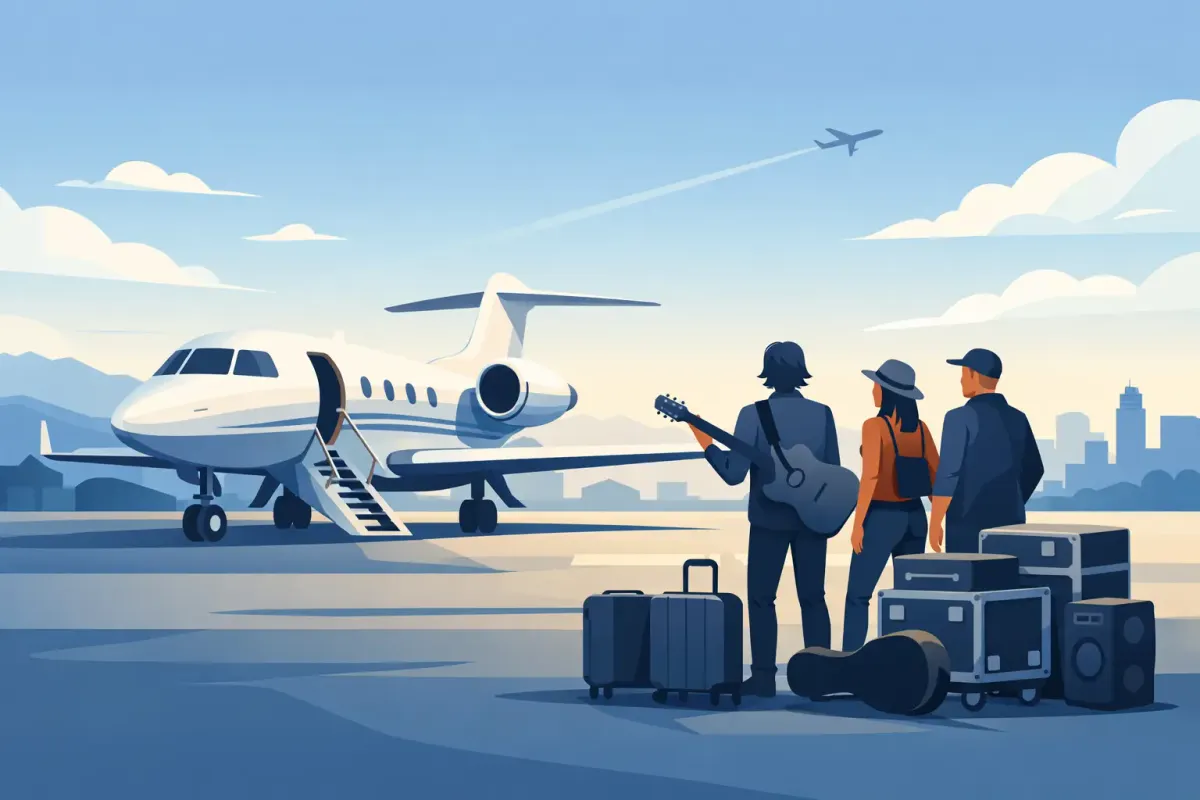
Private jet leasing for artist tours is not about luxury for the sake of luxury. At the serious end of the music business, it is about protecting the schedule, the artist, the crew, the production budget, and the promoter’s revenue.
A delayed commercial flight can mean missed soundcheck, delayed doors, overtime charges, angry sponsors, lost media slots, or a show that starts badly. For touring artists, DJs, bands, comedians, and entertainment executives, aircraft access can become a commercial tool rather than a vanity expense.
1. Artist Tours Run On Tight Schedules
Major tours often move across multiple cities in a short period. A performer may need to finish a show in London, attend a sponsor appearance in Paris the next morning, perform in Ibiza that night, and fly onward to Milan, Berlin, Dubai, or New York.
Commercial aviation was not built around that kind of schedule.
Private jet leasing allows tour managers to build flight plans around the tour routing, not airline timetables. That matters when the artist has rehearsals, press, VIP meet-and-greets, brand commitments, festival slots, and late-night performances.
2. Leasing Can Be Better Than Buying For Touring Artists
Most artists do not need permanent aircraft ownership. They need aircraft access during specific touring windows.
Buying a jet creates fixed costs: crew, maintenance, hangarage, insurance, management, inspections, records, and resale risk. Leasing can be more practical because it gives the artist or management company access for the period when the aircraft is needed.
For a tour, that could mean several weeks, several months, or a structured schedule around key dates. The point is simple: pay for operational access without taking on a long-term aviation asset.
3. It Protects The Artist’s Energy
Touring is physically brutal. Late nights, changing time zones, interviews, rehearsals, security concerns, and repeated performances can drain even experienced performers.
A leased private aircraft can reduce friction. The artist avoids crowded terminals, long check-in processes, public attention, airport delays, and unnecessary waiting.
That privacy and time control can help preserve vocal performance, sleep, recovery, and focus. For a headline act, that is not soft value. That directly affects the quality of the show.
4. It Helps Move Key People Efficiently
An artist tour is not only the artist. Depending on the scale, the moving group may include:
Tour manager, artist manager, security team, personal assistant, stylist, vocal coach, creative director, dancers, musicians, DJ, photographer, videographer, VIP guests, family members, and selected production staff.
Not everyone needs to fly privately. The expensive mistake is moving the wrong people commercially when their delay creates a chain reaction.
Private jet leasing lets management decide who needs to move with the artist and who can travel separately.
5. It Can Reduce Risk Around Festival And One-Off Dates
Festival appearances are unforgiving. The artist has a fixed slot. If they miss it, the damage is reputational and financial.
For one-off performances, closing sets, corporate entertainment, private events, award shows, film premieres, fashion week appearances, and brand activations, private aircraft access can be the difference between controlled arrival and chaos.
Leasing is especially useful when the artist must arrive close to showtime or leave immediately after the performance.
6. Privacy Matters More Than People Think
Artists are highly visible. Public flight movements, airport photos, fan attention, paparazzi, and security exposure can create serious problems.
Private jet leasing supports discreet routing, private terminals, controlled passenger lists, and tighter coordination with ground transport and security teams.
For high-profile artists, privacy is not just comfort. It protects personal safety, family security, tour secrecy, and brand reputation.
7. Aircraft Choice Depends On The Tour Route
The right aircraft depends on the mission. A short European tour may not need the same aircraft as a long-haul global tour.
For regional European dates, a midsize or super-midsize jet may work well. For transatlantic travel, Middle East routing, or longer multi-continent schedules, a larger cabin aircraft may be required.
Key factors include passenger count, luggage, wardrobe, instruments, security staff, range, airport access, departure windows, and cabin comfort.
A tour manager should not lease an aircraft based on prestige. The aircraft should match the route, the schedule, and the people who must be onboard.
8. Leasing Can Support Better Ground Coordination
Private aviation works best when it is tied into the full movement plan.
That includes airport selection, private terminal access, customs handling, ground transport, hotel arrivals, venue timing, security advance work, and contingency planning.
The aircraft is only one part of the tour logistics chain. Poor coordination can still create delays even with a private jet. Good coordination keeps the artist moving cleanly from aircraft to vehicle to hotel to venue.
9. Cost Control Still Matters
Private jet leasing is expensive. Pretending otherwise is amateurish.
The real question is whether the cost protects more value than it consumes. For a serious artist tour, the answer can be yes when the aircraft helps protect paid performances, brand commitments, media obligations, and schedule certainty.
Tour managers should compare:
Aircraft type, hourly rate, positioning costs, crew costs, airport fees, overnight charges, cancellation terms, passenger capacity, baggage allowance, catering, ground handling, and any minimum usage requirements.
A cheap aircraft quote is not always a good quote. The wrong aircraft, weak operator, poor routing, or unclear lease terms can cost more in the end.
10. The Lease Agreement Should Be Reviewed Carefully
Before signing, the artist’s team should understand the commercial terms.
Important points include aircraft availability, substitution rights, cancellation charges, payment schedule, liability, insurance, passenger rules, baggage limits, catering, route approvals, force majeure, operator responsibilities, and what happens if the aircraft becomes unavailable.
For larger tours, the lease should be reviewed alongside the tour calendar, promoter obligations, insurance policies, and artist management agreements.
Final Thought
Private jet leasing for artist tours works best when it is treated as serious tour infrastructure.
It gives artist managers, tour managers, promoters, and production teams more control over movement, privacy, timing, and recovery. It can reduce missed connections, protect key appearances, and keep the artist focused on performance rather than airport chaos.
For headline talent, international DJs, touring bands, entertainers, and VIP performers, the right aircraft lease can be a practical tool for keeping the tour on schedule.


