
7 Super-Midsize Jets Worth Leasing: Top Choices for Transcontinental Routes

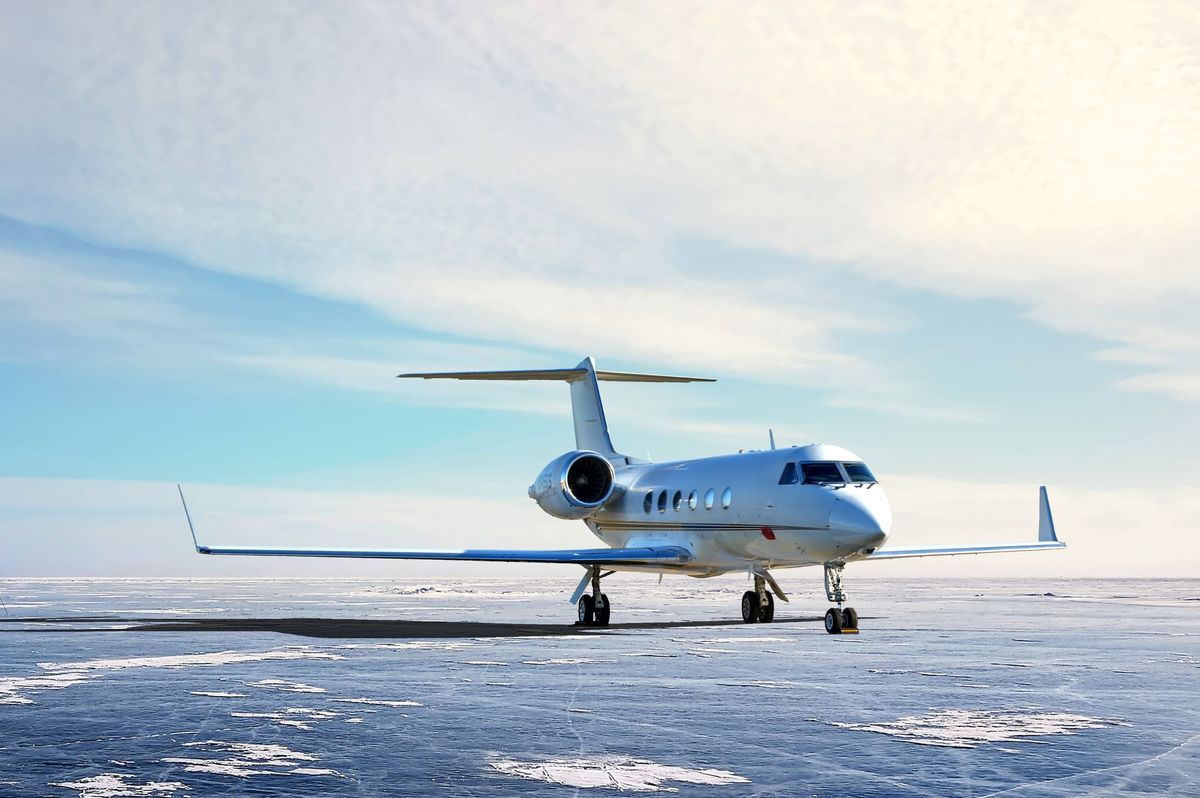
You need a jet that flies coast-to-coast without extra stops and still gives space, speed, and comfort. Super-midsize jets offer the sweet spot for transcontinental routes: long range, stand-up cabins, and lower operating costs than heavy jets.
Leasing one lets you match aircraft performance to your mission while keeping charter and ownership costs predictable.
Pick a super-midsize jet and you get business-jet comfort for cross-country trips, easy access to smaller airports, and cabins built for work or rest.
The list below highlights seven models that balance range, speed, and cabin size so you can pick the right air charter option for your schedule and passenger needs.
Key Takeaways
- Super-midsize jets balance range and cabin comfort for transcontinental travel.
- Leasing provides flexible access to business jets without full ownership.
- Match aircraft range and cabin layout to your mission for best value.
Defining Super-Midsize Jets and Their Unique Advantages
Super-midsize business jets give you more nonstop range, a true stand-up cabin, and higher cruise speeds than midsize types.
They balance long legs, cabin comfort, and operating costs so you can fly coast-to-coast or short transatlantic routes with fewer stops.
Performance and Efficiency for Extended Routes
You get 2,700–3,600 nautical miles of range in this class, enough for routes like New York–Los Angeles or many transatlantic city pairs with a fuel stop.
Engines and aerodynamics favor higher cruise speeds—typically 430–520 KTAS—so you save time on long sectors compared with midsize jets.
Fuel burn and runway needs sit between midsize and heavy jets.
That means lower operating costs than a heavy jet but better hot/high and short-field performance than many larger aircraft.
If your missions include multi-hour legs and varied airports, a super midsize often hits the sweet spot for mission flexibility.
Stand-Up Cabin Comfort and Amenities
Stand-up cabins in this class usually measure about 5'9" to 6'2" in height, so you can move and stretch on flights over four hours.
Typical cabin widths of 5–6 feet support flat-floor layouts, double-club seating, a functional galley, and a full lavatory—important for passenger comfort on transcontinental trips.
Baggage compartments commonly offer 80–120+ cubic feet, letting you carry luggage for longer trips without blocking the cabin.
Configurations seat seven to 12 passengers, so you can choose layouts focused on work, rest, or mixed use for business aviation or air charter needs.
Advanced Avionics and In-Flight Experience
Super-midsize jets usually include modern flight decks with advanced avionics suites for efficient flight planning, performance optimization, and safer single-crew relief options when available.
These systems reduce pilot workload and improve route flexibility in crowded airspace and on oceanic tracks.
In the cabin, expect high-speed connectivity, ergonomic lighting, and cabin management systems that support video conferencing and real-time data.
Those features keep your team productive and comfortable while the aircraft’s avionics support precise fuel planning and range predictions important for long-range private aviation flights.
Relevant industry reference: learn more about range and cabin details in this super midsize overview (https://acass.com/super-midsize-jet/).
Top 7 Super-Midsize Jets for Coast-to-Coast Travel
These jets balance range, cabin comfort, and operating cost so you can fly nonstop coast-to-coast or with a single fuel stop.
Each entry highlights range, cabin features, passenger counts, and mission fit so you can match aircraft to your trip and group size.
Bombardier Challenger 350 and Challenger 3500
The Challenger 350 and the newer Challenger 3500 deliver roomy cabins and long-range performance ideal for coast-to-coast legs.
Expect up to about 3,200 nm range on the Challenger 350 family, enough for many transcontinental routes with typical cruise speeds near 480–490 knots.
Cabin layout supports 8–10 passengers in club seating plus a refreshment center and an enclosed aft lavatory.
The 3500 adds modern cabin management, larger windows, and upgraded connectivity for work or video calls.
You’ll get a flat floor, stand-up cabin height, and good baggage capacity for checked bags and golf clubs.
Operators market these as reliable, cost-effective super-midsize options for executives and families.
Gulfstream G280
The Gulfstream G280 pairs strong speed with extended range, making it a top pick for true coast-to-coast missions without stops in many cases.
Rated range reaches roughly 3,600 nm with cruise speeds around 500–540 knots depending on profile.
Cabin seats 8–10 passengers in a quiet, well-insulated interior and supports a full galley and enclosed lavatory.
Performance includes high-altitude cruise and strong short-field ability, letting you use smaller airports near city centers.
If you want a pilot-friendly cockpit and lower perceived cabin noise on long legs, the G280 delivers a good mix of comfort, payload, and efficiency for business travel.
Cessna Citation Longitude
The Citation Longitude focuses on long domestic hops and coast-to-coast legs with a balance of range and low cabin noise.
Its typical range sits near 3,500 nm and cruise speed around 470–480 knots—enough for nonstops on many U.S. routes.
The cabin fits 8–9 passengers with fully berthable seats, a walk-in baggage compartment, and large windows for natural light.
You’ll find a modern environmental control system and one of the quietest cabins in class, which helps during long workdays.
Choose the Longitude when you want Cessna’s common-type support and a comfortable, low-fatigue environment for multi-hour flights.
Embraer Legacy 500 and Praetor 500
Embraer’s Legacy 500 and the upgraded Praetor 500 share a wide, flat-floor stand-up cabin and strong transcontinental range.
The Legacy 500 offers roughly 3,000+ nm, while the Praetor 500 stretches past 3,300 nm thanks to improved fuel efficiency and auxiliary tanks.
Cabins carry 7–10 passengers with spacious seating, modern cabin systems, and significant baggage capacity.
The Praetor adds enhanced avionics and an improved environmental system plus better range for direct coast-to-coast missions.
If you value a roomy, business-ready cabin with speed and the option for extended nonstop legs, these Embraer models give a compelling mix of comfort and performance.
Dassault Falcon 2000 Series
The Falcon 2000 family brings slow-climb efficiency and a wide cabin that feels closer to a large-cabin jet while still fitting many primary airports.
Range varies across variants, but many Falcon 2000 versions cover 3,000+ nm—suitable for most transcontinental flights.
You get a stable, quiet cabin laid out for 8–10 passengers plus a full galley and enclosed lavatory.
Dassault’s pedigree in handling and high-speed cruise makes the Falcon 2000 a solid choice if you want a wide-cabin feel without heavy-jet operating costs.
Pilots and passengers often cite the Falcon’s solid handling and long-range flexibility as reasons to select it for long business routes.
Citation X+
The Citation X+ delivers top cruise speed in the super-midsize class, cutting flight time on long cross-country trips.
Cruise speeds can approach mid-500s knots, which shortens a coast-to-coast flight compared with typical competitors.
Range and cabin comfort still support 8–10 passengers and transcontinental missions with adequate baggage space.
The cabin is narrower than some rivals but optimized for speed and fast trip times.
If minimizing flight time is your priority, the X+ gives a strong performance edge while retaining Cessna’s support network for operations and maintenance.
Hawker 4000 and Falcon 50
The Hawker 4000 and Dassault Falcon 50 represent slightly older super-midsize and mid-to-super options that remain useful for coast-to-coast trips.
The Hawker 4000 provides a generous cabin and solid range near the class average, while the Falcon 50’s trijet design supports long-range cruise and strong climb performance.
Both aircraft typically seat 7–9 passengers and include full lavatory and galley options.
You’ll find good baggage capacity and the ability to use smaller airports when needed.
These types can be cost-effective on the used-leasing market if you want proven range and cabin features without paying new-model premiums.
Further reading on charter fleets and class definitions appears in industry listings like JetOptions’ roundup of top super-midsize jets for 2026.
Real-World Use Cases: Matching Super-Midsize Jets to Travel Needs
Super-midsize jets give you coast-to-coast range, stand-up cabins, and enough baggage for multi-day trips.
Pick a model based on passenger count, nonstop range, and how much luggage you need to carry.
Popular Routes: Los Angeles to New York and Beyond
Flying Los Angeles to New York nonstop needs about 2,400 nautical miles of range in real conditions.
Super-midsize jets like the Gulfstream G280 or Challenger 3500 commonly handle that leg with typical payloads and headroom for delays or reroutes.
You should check published range versus practical range—weather, winds, and passenger weight cut effective range.
If you plan transatlantic sectors, expect a fuel stop on many super-midsize types; the G280 and some Praetor models extend that capability.
When you charter, confirm the operator can file preferred routing and has alternate airports planned.
That reduces the chance of a fuel stop that disrupts your schedule.
Matching Baggage and Cabin Requirements
Super-midsize cabins usually let you stand up and seat 7–10 people comfortably.
Look for flat floors and club seating if you need space to work or host meetings midflight.
Baggage capacity varies—typical external and internal bays hold roughly 80–120 cubic feet.
That fits several large suitcases for a group, but not full sports gear plus heavy equipment.
Before you book, list baggage pieces, sizes, and any odd items like golf clubs or camera cases.
Ask the operator for exact baggage volume and door dimensions so you avoid last-minute cargo limits.
Business and Leisure in Private Jet Charter
If your trip is business-focused, pick a jet with reliable Wi‑Fi, a clear work layout, and in‑flight power outlets.
Super-midsize cabins often include a forward or aft lavatory and a galley for light catering—useful on multi-leg days.
For leisure travel, prioritize cabin comfort, noise levels, and baggage for recreational gear.
Families or groups often value extra baggage space and a quieter cabin to rest on long flights.
When booking an air charter, confirm the operator’s safety credentials and that the crew is type‑rated for the specific super-midsize jet.
That keeps your schedule predictable and your trip smoother.
How to Choose the Best Super-Midsize Jet for Your Mission
Start by matching the trip profile, passenger count, and airport access to a specific aircraft.
Then weigh cabin size, nonstop range, operating cost, and manufacturer support against how often you fly and where.
Evaluating Range, Comfort, and Cabin Layout
Decide the furthest nonstop legs you need. For transcontinental U.S. flights, expect 3,000–4,000 nm capability for super-midsize jets.
If you routinely cross the Atlantic, prioritize models with 4,000+ nm range or plan a fuel stop. Check published runway performance for the airports you use; some midsize jets handle short fields better than heavy jets.
Count seats and plan cabin zones. If you need a work area plus a rest zone, choose cabins with flat floors and 6-foot-plus standing height.
Look at cabin volume and length to compare real usable space, not just seat numbers. Review cabin altitude and environmental control specs for long flights; lower cabin altitude reduces fatigue.
Compare cruise speed versus fuel burn. A faster jet can cut duty time but raise hourly costs.
Factor in how many passengers, typical baggage, and whether you’ll need at-seat power and satellite connectivity for work.
Manufacturer Support and Ownership Models
Check the manufacturer’s global maintenance network and parts availability. A strong support network lowers downtime and unexpected costs, which matters if you fly international routes or into remote airports.
Established OEMs and brands tied to large operators often offer better logistics than smaller builders. Decide between charter, fractional, dry lease, or full ownership.
Fractional programs like NetJets provide predictable scheduling and maintenance but cost more long-term. Charter avoids fixed costs and suits irregular flyers.
Leasing lets you control operations without ownership risk. Review warranty, training, and avionics upgrades.
Advanced avionics reduce pilot workload and can expand airport access, so confirm software update policies and training packages. Compare residual value projections; aircraft with strong resale tend to hold value better and reduce total cost per flight hour.
Frequently Asked Questions
Which super-midsize jets can reliably fly nonstop on transcontinental routes?
Praetor 600 and Gulfstream G280 commonly make nonstop coast-to-coast flights under normal wind conditions. The Praetor 600’s ~4,000 nm capability often covers long transcontinental or near-transatlantic sectors without fuel stops; the G280’s ~3,600 nm range also handles most coast-to-coast trips.
Challenger 350/3500 and Citation Longitude routinely complete US transcontinental routes with standard payloads, though very long routings or high winds can require a fuel stop at max payload. Real-world nonstop ability depends on passenger count, baggage, and headwinds.
What range and payload should I prioritize when leasing a jet for coast-to-coast missions?
Target at least 3,200–3,500 nautical miles if you want routine nonstop coast-to-coast performance with a typical passenger load. If you need more operational margin or extra passengers and bags, prioritize 3,800–4,000+ nm.
Also check payload at long-range cruise. Some jets hit their max range only with reduced payload.
Ask the operator for the specific range-versus-payload tables for the aircraft you’ll lease.
How do super-midsize jet lease rates compare with midsize and large-cabin aircraft?
Super-midsize jets lease and charter for roughly $8,000–$11,000 per flight hour in 2026 for popular models. That sits above midsize jets, which often run lower hourly rates, and below heavy/large-cabin jets that typically cost $9,500–$13,000+ per hour.
Remember to add positioning, landing fees, crew overnight, and taxes; these typically add 25–35% to the base hourly figure and can change the effective cost between categories depending on route and operator.
Which super-midsize jets offer the best cabin comfort and onboard connectivity for long flights?
Look for flat-floor cabins, six-foot-plus headroom, and fully enclosed lavatories for real long-flight comfort. The Challenger 3500 and Praetor 600 have modern cabins and systems that enhance comfort and in-flight service.
For connectivity, choose operators that install high-bandwidth Ka-band or strong Ku-band Wi‑Fi. Ask for specifics on declared Wi‑Fi speeds and cabin entertainment when you evaluate leasing offers.
What operating costs should I expect for a super-midsize jet on frequent transcontinental flying?
Plan on fuel being the largest variable; longer legs and higher cruise speeds raise fuel burn significantly. Add routine maintenance, engine reserves, insurance, and crew salaries.
Typical all-in trip bills add about 25–35% above base hourly rates for fees, surcharges, and handling. Also budget for scheduled inspections and AOG risks; older airframes may need heavier maintenance cycles that raise monthly operating costs.
How do I evaluate older models versus newer super-midsize jets when leasing for long-range trips?
Compare total hours, maintenance history, avionics upgrades, and refurbishments rather than age alone. Newer models often provide better fuel efficiency, updated cabin systems, and lower downtime.
Older well-maintained airframes can lease at lower hourly rates. Request logbooks, maintenance records, and current weight-and-balance plus performance data.
Verify operator experience and parts support to avoid surprise costs and operational limits on long hauls.