
ACMI Leasing into India: Understanding DGCA Wet Lease Regulations for Aircraft Operators


India's aviation sector has grown rapidly, and airlines often need extra aircraft to meet demand. Wet leasing, also known as ACMI (Aircraft, Crew, Maintenance, and Insurance), allows Indian carriers to lease planes with crew and support services from foreign operators. The Directorate General of Civil Aviation (DGCA) sets the rules for these arrangements to ensure safety and compliance.
The DGCA has recently streamlined its wet lease regulations to help Indian airlines address supply chain delays and rising travel demand while maintaining strict safety oversight. These changes affect how you can bring leased aircraft into India and what requirements you must meet. Understanding the regulatory framework is important whether you operate an airline, work with leasing companies, or manage aviation compliance.
The rules cover everything from registration requirements to crew qualifications and safety standards. DGCA regulations govern how long you can wet lease aircraft, typically allowing a maximum of six months with possible extensions. Knowing these requirements helps you plan operations and stay compliant with Indian aviation law.
Key Takeaways
- Wet leasing (ACMI) provides aircraft with crew, maintenance, and insurance to Indian carriers facing capacity constraints
- The DGCA has updated regulations to streamline wet lease operations while maintaining safety oversight standards
- Indian operators must follow specific rules for lease duration, crew qualifications, and foreign aircraft registration
Understanding ACMI, Wet Lease, Dry Lease, and Damp Lease Models
Aircraft leasing comes in several distinct forms that determine who controls operations, provides crew, and handles maintenance. Each model transfers different levels of responsibility between the lessor and lessee, affecting costs, regulatory compliance, and operational flexibility for your airline.
Defining ACMI in the Leasing Context
ACMI stands for Aircraft, Crew, Maintenance, and Insurance. This model represents a complete operational package where the lessor provides all four elements to you as the lessee.
Under an ACMI arrangement, you receive a fully operational aircraft with flight crew, cabin crew, and all necessary maintenance support. The lessor also carries insurance coverage for the aircraft. You only need to provide fuel and pay airport fees.
ACMI leasing emerged in the early 1990s as airlines needed more flexible capacity solutions. This model allows you to add aircraft to your fleet quickly without the long-term commitment of purchasing.
The lessor maintains operational control in most ACMI agreements. However, you operate the aircraft under your airline designator code and flight numbers. This arrangement works well when you need short-term capacity during peak seasons or route launches.
Wet Lease versus Dry Lease: Key Differences
The difference between wet lease and dry lease centers on who provides the crew and maintains operational control. A wet lease includes the aircraft and crew, while a dry lease transfers only the aircraft to you.
In a dry lease, you provide your own flight crew, cabin crew, and maintenance. You also arrange your own insurance and take full operational control of the aircraft. This typically involves longer-term agreements ranging from two to twelve years.
Key Distinctions:
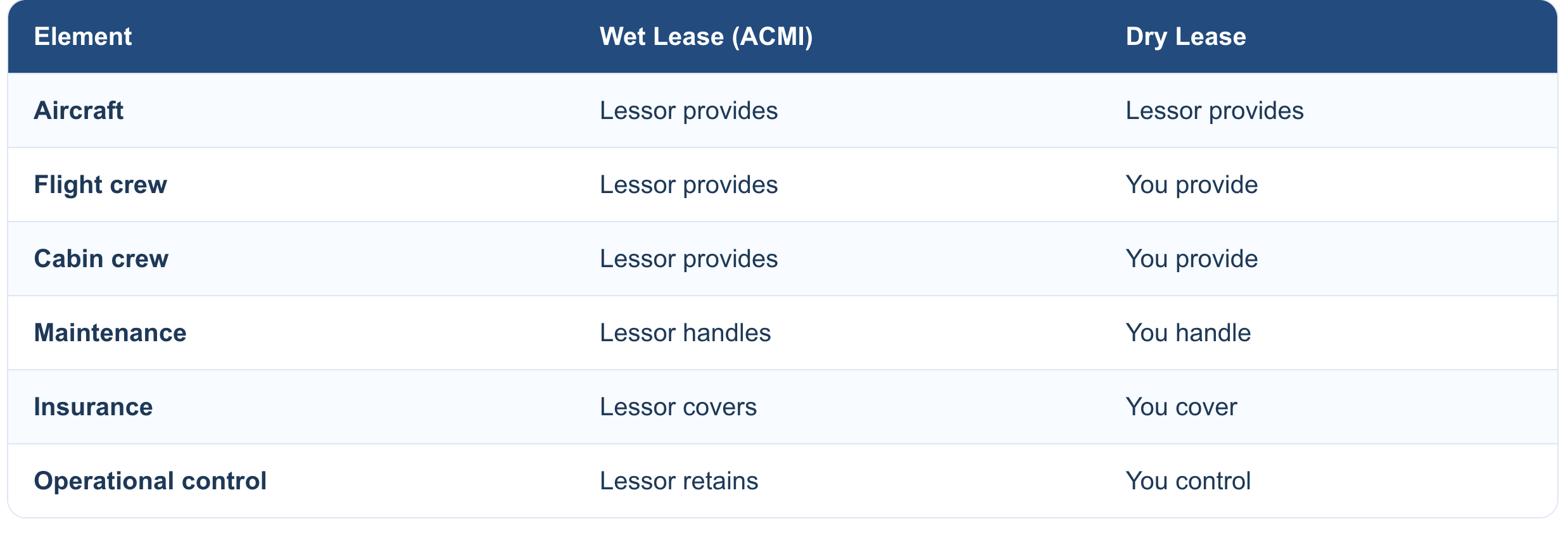
For personnel licensing, dry leases require you to have qualified crew holding appropriate ratings. Wet leases shift this responsibility to the lessor, who must ensure their crew meets all regulatory requirements.
Damp Lease Arrangements: Intermediate Approach
A damp lease sits between wet and dry lease models. You receive the aircraft with flight crew but provide your own cabin crew.
This arrangement gives you more control over passenger service while still relying on the lessor for technical flight operations. The lessor provides cockpit crew and maintenance support. You handle cabin crew training, scheduling, and service standards.
Damp leases appear less frequently than wet or dry leases in commercial aviation. They work best when you want to maintain your brand's cabin service standards but lack sufficient cockpit crew. Indian operators might use damp leases when expanding to new aircraft types where pilot training takes time.
The regulatory framework for damp leases requires careful attention. You must ensure the lessor's flight crew holds valid licenses recognized by Indian authorities.
Strategic Uses for Indian Operators
Indian operators use different lease models based on their specific operational needs and growth strategies. ACMI leases help you manage seasonal demand spikes during holiday periods or sudden capacity shortages.
When you need aircraft quickly due to grounded fleet or unexpected maintenance, ACMI provides ready-to-fly solutions. You can deploy leased aircraft within weeks rather than months required for dry lease crew training.
Dry leases suit your long-term fleet planning better. If you're establishing new routes or expanding your permanent capacity, dry leases offer lower monthly costs. You maintain full control over operations and build your crew base.
New airlines in India often start with ACMI agreements while building their operational infrastructure. As you develop maintenance capabilities and train crew, you can transition to dry leases. This phased approach reduces your initial capital requirements and operational risk.
For route testing, ACMI gives you flexibility to enter and exit markets without long-term aircraft commitments. You can assess demand on new routes before committing to permanent fleet additions through dry leases or purchases.
The DGCA's Regulatory Framework for Wet and Damp Leasing
The Directorate General of Civil Aviation maintains specific rules that govern how Indian carriers can lease aircraft with crew and maintenance from foreign operators. The DGCA proposes stricter norms for wet-leased plane operations to ensure safety oversight while allowing flexibility for operational needs.
Overview of Civil Aviation Requirements (CAR)
The Civil Aviation Requirements form the foundation of wet and damp lease regulations in India. These requirements outline how Indian airlines must operate foreign-registered aircraft under specific conditions.
Under wet leasing arrangements, you receive an aircraft along with the crew, maintenance, and insurance from the lessor. The foreign aircraft remains under the lessor's operational control and safety oversight. Damp leasing provides similar arrangements but with some variations in crew composition.
The Aircraft Rules, 1937 establish the basic framework for these operations. Rule 1 specifically addresses how aircraft rules apply to leased aircraft, stating that foreign-registered planes follow their country of registration's rules for licensing, airworthiness, and log books.
The DGCA has issued criteria for wet and damp leasing that Indian operators must follow when bringing in foreign aircraft.
DGCA Approval Process and Eligibility
You must obtain DGCA approval before starting any wet or damp lease operation. The regulatory framework requires you to submit applications through a standardized process that evaluates multiple safety factors.
The Directorate General of Civil Aviation now restricts wet and damp leases to countries with reliable safety oversight systems. This means you can only lease aircraft from nations that meet international aviation safety standards. Your airline must demonstrate the operational need for the leased aircraft.
Indian airlines can seek approval for these leases in emergency situations or when facing supply chain challenges. DGCA allows airlines to request wet and damp leases during emergencies, such as engine issues or unexpected aircraft groundings.
The approval process includes detailed documentation requirements and safety assessments to ensure compliance with Indian aviation standards.
Duration Limits and Extensions
The regulatory framework sets specific time limits for how long you can operate wet or damp leased aircraft. Recent revisions have changed these duration parameters based on operational realities.
Previously, you could lease aircraft under wet or damp arrangements for up to three years. The DGCA has increased the lease period beyond the current three-year limit as part of enhanced regulatory oversight measures.
This extension reflects the aviation industry's needs while maintaining safety standards. You can request extensions based on your operational requirements, but each extension requires renewed approval from the DGCA.
The longer lease periods help you manage fleet planning more effectively, especially when dealing with aircraft delivery delays or supply chain disruptions affecting new aircraft acquisitions.
Exemptions for Government and Special Operations
Certain operations receive special consideration under the wet and damp leasing framework. Government operations and specific emergency situations may qualify for expedited approval or modified requirements.
Your airline might receive different treatment if you're operating charter services, emergency medical flights, or government-contracted operations. These exemptions recognize the unique nature of non-scheduled and special-purpose flights.
The Civil Aviation Requirement allows for case-by-case evaluation of unusual circumstances. You must still meet fundamental safety requirements, but the DGCA may adjust procedural timelines or documentation needs based on the operational urgency and public interest considerations.
Safety Oversight and International Compliance
The DGCA has established strict safety standards for wet-leased aircraft that prioritize international compliance and airworthiness. Indian operators must verify that foreign aircraft meet specific ICAO benchmarks and maintain robust oversight throughout the lease period.
Role of the State of Registry and State of Operator
When you wet-lease an aircraft into India, two regulatory authorities share oversight responsibilities. The State of Registry maintains jurisdiction over aircraft registration, airworthiness certification, and technical log books for the foreign-registered aircraft.
The State of Operator, which is India through the Directorate General of Civil Aviation, oversees operational safety, crew training standards, and compliance with Indian aviation requirements. You need approval from both authorities before commencing operations.
The DGCA has issued specific criteria under Rule 1 of the Aircraft Rules, 1937, which clarifies how regulations apply to leased aircraft. For aircraft registered outside India, the registration and personnel licensing rules of that country apply instead of Indian equivalents.
ICAO USOAP and Effective Implementation Scores
Your lessor country must meet minimum ICAO USOAP safety standards before the DGCA approves your wet lease agreement. The new rules limit leases to countries with robust safety oversight and require verification of ICAO compliance.
The ICAO Universal Safety Oversight Audit Programme (USOAP) evaluates how effectively countries implement international safety standards. You must provide documentation showing the lessor's country maintains acceptable effective implementation scores across all eight critical safety areas.
Countries with poor USOAP ratings or significant safety deficiencies cannot provide wet-leased aircraft to Indian operators. This requirement prevents aircraft grounding issues and ensures consistent safety standards across your fleet.
Aircraft Age and Airworthiness Standards
The DGCA requires wet-leased aircraft to meet specific age limitations depending on aircraft type and operational requirements. You must verify that all airworthiness directives, modifications, and maintenance programs comply with both the State of Registry standards and Indian regulations.
Your aircraft must hold a valid Certificate of Airworthiness from its country of registration throughout the lease period. The maintenance standards must align with ICAO Annexes and meet or exceed Indian requirements for similar operations.
Procedures for Safety Monitoring
The DGCA's revised framework mandates standardized surveillance procedures for wet-leased operations. You must establish reporting mechanisms that allow continuous safety monitoring by both Indian authorities and the lessor's regulatory body.
Indian operators focus on commercial aspects while foreign lessors manage day-to-day operations. However, you remain responsible for ensuring personnel licensing meets ICAO standards and that flight crews maintain proper qualifications.
The DGCA conducts regular audits and inspections of wet-leased aircraft operating in Indian airspace. You must maintain complete operational records, technical logs, and crew documentation accessible for regulatory review at all times.
Leasing Dynamics: Indian Operators, Foreign Lessors, and Market Implications
Indian airlines increasingly rely on relationships with international aircraft lessors to manage fleet expansion and operational challenges. The regulatory framework shapes how these partnerships function, while market pressures drive airlines to balance wet leasing against long-term fleet strategies.
Engaging with Foreign Lessors
When you engage a foreign lessor for wet lease operations, you're entering an agreement where the lessor provides the aircraft, crew, maintenance, and insurance as a complete package. This differs from dry lease arrangements where you receive only the aircraft and must supply your own crew and maintenance.
India's aviation regulator is streamlining wet-leasing regulations to address rising travel demand and supply chain delays. Your ability to quickly induct foreign-registered aircraft helps when your own fleet faces grounding due to engine issues or maintenance backlogs.
The passage of India's Protection of Interests in Aircraft Objects bill makes it easier for global lessors to repossess jets and engines when carriers default on payments. This implementation of the Cape Town Convention strengthens lessor confidence in the Indian market.
Indian Market Trends and Fleet Management
Your fleet management strategy must now account for unprecedented growth in India's aviation sector. Millions of passengers want to travel, creating pressure on your existing capacity.
Aircraft shortages and supply chain disruptions force you to consider wet leasing as a viable solution. The DGCA has revised aircraft leasing norms specifically to help airlines address these critical challenges.
Under the new regulations, you can obtain DGCA approval to induct foreign-registered aircraft through wet or damp leasing arrangements. Damp leasing gives you more flexibility by allowing the lessor to provide the aircraft and partial crew support while you supply remaining personnel.
You'll find that operators are pivoting toward lease options after years of complex approval processes and high import duties made purchasing difficult.
Impact on Indian Airlines' International Ambitions
Your international expansion plans depend heavily on fleet availability and operational flexibility. ACMI leasing allows you to scale capacity quickly for new routes without committing to aircraft purchases.
The enhanced oversight of wet-leased aircraft may ease restrictions on routes and crew sourcing. This gives you operational room to test international markets before making long-term investments.
The DGCA's commitment to aligning India's aviation safety standards with global benchmarks ensures your leased aircraft meet international requirements. When you wet lease out Indian-registered aircraft to foreign operators, the DGCA maintains safety oversight to meet India's obligations as the State of Registry.
Your ability to compete internationally improves when you can access modern aircraft through flexible leasing arrangements. This becomes particularly important during peak travel seasons or when launching new international destinations.
Real-World Applications and Operational Flexibility
Indian carriers face unpredictable challenges that demand quick solutions, from unexpected aircraft grounding to seasonal demand spikes. ACMI leasing provides the operational flexibility you need to maintain schedules and expand networks without long-term financial commitments.
Responding to Aircraft Grounding and Supply Shortages
When aircraft grounding occurs due to maintenance issues or regulatory compliance, your airline faces immediate capacity loss. ACMI leasing provides crucial operational flexibility that lets you replace grounded aircraft within days rather than months.
Indian operators have dealt with significant supply chain disruptions affecting aircraft deliveries. Engine availability issues, particularly with certain narrow-body models, have caused delivery delays stretching months or even years. You can bridge these gaps through wet leasing arrangements that keep your route network intact.
The global aircraft shortage has made ACMI solutions especially valuable. When manufacturers cannot deliver on schedule, you maintain your growth plans by securing wet lease capacity. This approach lets you honor ticket sales and preserve customer trust while waiting for permanent fleet additions.
Case Studies: Network Resilience and Route Expansion
Several Indian carriers have used wet leasing to launch international routes before receiving their own wide-body aircraft. You can test market demand on new routes without purchasing expensive long-haul aircraft upfront.
During peak travel seasons like Diwali or summer holidays, your passenger numbers can increase by 30-40%. ACMI arrangements let you add temporary capacity exactly when demand peaks. You avoid the cost of owning aircraft that would sit idle during slower months.
Indian operators have also deployed wet lease aircraft to maintain connectivity when fleet modernization programs temporarily reduce available aircraft. This strategy ensures you do not surrender valuable airport slots or market share to competitors.
Temporary Capacity Enhancement for Indian Carriers
Your airline can scale operations up or down based on actual market conditions through ACMI contracts. Most agreements run for 3-12 months, giving you flexibility to adjust as demand changes.
ACMI leasing works as payment based on block hours operated, which means you only pay for actual flying time. This variable cost structure protects your cash flow during uncertain periods.
Common uses for temporary capacity:
- Seasonal routes requiring 2-4 additional aircraft for 3-6 months
- Hajj operations needing wide-body capacity for specific weeks
- Charter programs supporting tourist destinations during high season
- Emergency replacements covering aircraft in heavy maintenance
You benefit from having the lessor handle crew training, maintenance planning, and insurance requirements. This lets your team focus on commercial operations rather than technical details.
Recent Policy Reforms and the Future of Aircraft Leasing in India
India has introduced major legislative changes to modernize its aviation sector and align with international standards. The Protection of Interests in Aircraft Objects Bill, 2025 brings the Cape Town Convention into domestic law, while updated wet leasing rules give your airline more flexibility in managing fleet capacity.
The Bharatiya Vayuyan Adhiniyam, 2025, and Related Legislation
The Bharatiya Vayuyan Adhiniyam, 2025 represents a comprehensive overhaul of India's aviation regulatory framework. This legislation works alongside the Protection of Interests in Aircraft Objects Bill to create a modern legal foundation for your leasing operations.
The Cape Town Convention implementation gives creditors stronger rights when aircraft are financed or leased. If you lease aircraft into India, you now benefit from clearer legal protections and faster resolution processes.
The new aviation bill is expected to reduce leasing costs by 8-10%. These savings could help you lower operational expenses and potentially offer more competitive fares to passengers.
The legislation aligns Indian law with global aviation standards. This makes India more attractive as a destination for aircraft financing and leasing partnerships.
Promoting a Robust and Safe Leasing Environment
The DGCA has proposed amendments to existing wet leasing regulations to give Indian airlines greater operational flexibility. Under current rules, you can only wet lease aircraft during emergency situations or capacity shortages.
The proposed changes would allow more routine use of wet leased aircraft while maintaining safety oversight. The DGCA currently requires you to lease from countries with an average industry safety score above 80%, though exemptions may become available under the new draft rules.
Safety remains a priority through these reforms. The regulatory framework ensures compliance with ICAO standards while reducing bureaucratic barriers.
Your airline benefits from clearer Civil Aviation Requirements that define leasing procedures, documentation standards, and operational limits. These updates make it easier to plan fleet expansion and respond to market demands.
Preparing for Growth and Global Best Practices
India's aviation sector faces challenges including global aircraft shortages and supply chain disruptions. The evolving wet leasing policy helps you navigate these constraints while expanding your operations.
The regulatory changes position India as a preferred destination for aircraft leasing companies. You can expect increased competition among lessors, which may drive down costs further.
Your compliance requirements now match international best practices. This alignment makes it easier to work with global leasing partners and financial institutions.
The reforms support long-term growth by creating predictable legal outcomes. When you invest in aircraft or sign leasing agreements, you have greater certainty about creditor rights and enforcement procedures.
Indian airlines can now access a wider range of leasing options while maintaining the DGCA's safety oversight. This balance helps you manage fleet requirements efficiently without compromising operational standards.
Frequently Asked Questions
ACMI leasing terminology often causes confusion, and the DGCA has specific approval processes that require proper documentation and adherence to safety standards. Indian operators must understand how operational responsibilities are split and what compliance requirements apply throughout the lease period.
What is the difference between an ACMI lease and a wet lease in aviation?
ACMI and wet lease are essentially the same thing in aviation. The term ACMI stands for Aircraft, Crew, Maintenance, and Insurance, which describes exactly what the lessor provides to you as the lessee.
When you enter into a wet lease agreement, the lessor provides an aircraft complete with crew, maintenance, and insurance. This differs from a dry lease where you only receive the aircraft itself. You must then provide your own crew, handle all maintenance, and arrange insurance coverage.
Indian carriers like IndiGo and SpiceJet currently operate wet-leased aircraft under these arrangements.
Under what conditions does the DGCA permit foreign-registered aircraft to be wet leased by Indian operators?
The DGCA permits you to wet lease foreign-registered aircraft primarily during emergency situations or when operational needs justify it. These circumstances typically include aircraft shortages due to engine issues, supply chain problems, or unexpected grounding of your fleet.
You must demonstrate that the wet lease serves a legitimate operational requirement. The DGCA has revised norms to allow Indian airlines to seek approval for wet and damp leases in emergencies, giving you more flexibility during critical situations.
The regulator balances your operational flexibility with safety compliance requirements. You cannot use wet leasing as a permanent substitute for building your own fleet capacity.
What approvals and documentation are required to obtain DGCA clearance for a wet lease into India?
You need to submit a formal application to the DGCA before entering into any wet lease arrangement. Your application must include the proposed lease agreement, details about the foreign aircraft and operator, and justification for the lease.
The DGCA requires you to provide comprehensive safety and airworthiness documentation for the aircraft. This includes current certificates of airworthiness, maintenance records, and proof of insurance coverage that meets Indian regulatory standards.
You must also submit crew qualifications and licensing information. The foreign operator's safety record and regulatory standing with their home aviation authority forms part of your application package.
The DGCA issued specific criteria for wet and damp leasing that complement existing dry lease provisions. Your documentation must satisfy all these requirements before approval.
How are operational control, safety oversight, and regulatory responsibilities divided between the lessor and the Indian lessee in an ACMI arrangement?
In an ACMI arrangement, the foreign lessor retains responsibility for providing qualified crew members and maintaining the aircraft to airworthiness standards. They must also ensure adequate insurance coverage throughout the lease period.
You as the Indian lessee assume operational control of the flights. This means you determine routes, schedules, and commercial decisions while operating under your Air Operator Certificate.
The DGCA maintains safety oversight authority over all operations conducted in Indian airspace. The regulator has proposed stricter norms for oversight of wet-leased planes operated by Indian airlines to address safety concerns.
You remain accountable to the DGCA for ensuring that the wet-leased aircraft and crew meet Indian regulatory requirements. This creates a shared responsibility framework where both parties must maintain compliance with applicable standards.
What are the typical time limits, renewal conditions, and compliance obligations for DGCA-approved wet leases?
The DGCA sets specific duration limits for wet lease arrangements. The revised Civil Aviation Requirements published in December 2024 include updated provisions regarding lease duration for foreign-registered aircraft.
You must apply for renewal before your current wet lease approval expires. The DGCA evaluates whether the operational circumstances that justified the original approval still exist.
Your compliance obligations continue throughout the entire lease period. You must report any safety incidents, operational changes, or modifications to the lease terms to the DGCA promptly.
The regulator can impose additional conditions or withdraw approval if you fail to maintain compliance. Regular audits and inspections ensure that both you and the lessor meet ongoing safety and operational standards.
How do DGCA wet lease requirements affect crew licensing, maintenance standards, and insurance coverage for aircraft operating in India?
Crew members operating wet-leased aircraft in Indian airspace must hold valid licenses recognized by the DGCA. Foreign crew licenses require validation or acceptance under bilateral agreements between India and the aircraft's country of registration.
The foreign lessor must maintain the aircraft according to the standards of the aircraft's registered country. However, these standards cannot fall below the minimum requirements set by the DGCA for operations in India.
You must verify that maintenance is performed by appropriately certified personnel and facilities. All maintenance records must be available for DGCA inspection upon request.
Insurance coverage must meet or exceed Indian regulatory minimums for liability, hull damage, and passenger protection. The DGCA's updated regulations on wet and damp leasing require enhanced safety compliance that extends to insurance provisions.
Your insurance policies must clearly define coverage during operations in Indian territory. The DGCA may require proof of coverage before granting or renewing wet lease approvals.