Wet Lease vs Dry Lease Explained: Key Differences for Aircraft Operators

Airlines and aircraft operators face a basic choice when they need extra planes: wet lease or dry lease. The names don't refer to fuel or water. They describe who controls the aircraft and its crew.
A wet lease means you rent both the aircraft and the crew from the leasing company, while a dry lease means you only rent the aircraft and provide your own crew. This difference affects everything from costs to legal responsibility. Each option works better for different situations.
Understanding these two leasing types helps you make smarter decisions for your operations. Whether you need short-term capacity during peak season or want to add aircraft to your fleet long-term, knowing the key differences will save you time and money.
Key Takeaways
- Wet leases include aircraft, crew, maintenance, and insurance while dry leases provide only the aircraft
- Operational control stays with the lessor in wet leases but transfers to you in dry leases
- Wet leases work best for short-term needs and dry leases suit longer-term fleet expansion
Core Differences Between Wet Lease and Dry Lease
The primary distinctions between wet lease and dry lease arrangements center on who provides the crew, who maintains operational control, and how responsibilities are divided between the aircraft owner and the operator.
Definition and Structure
A wet lease (also known as ACMI) means the lessor provides you with the aircraft, crew, maintenance, and insurance. The acronym ACMI stands for Aircraft, Crew, Maintenance, and Insurance, which covers everything you need except fuel and airport fees.
A dry lease transfers only the aircraft to you without any crew or support services. You must provide your own flight crew, handle all maintenance, arrange insurance, and take full responsibility for operating the aircraft. This arrangement gives you the bare aircraft only.
Under 14 CFR 1.1, these lease types have specific legal definitions. The regulation clarifies that in a wet lease, the lessor retains operational control, while in a dry lease, you as the lessee assume operational control.
Operational Control and Legal Considerations
Operational control is the key legal difference between wet lease and dry lease agreements. In a wet lease, the lessor maintains operational control and authority over the aircraft. The lessor's crew operates under their company's procedures and certificates.
When you enter a dry lease, operational control shifts to you completely. You must hold the appropriate operating certificates and ensure your operations comply with all regulations. 14 CFR 110.2 provides further guidance on operational control requirements for commercial operators.
Your legal obligations differ significantly based on which lease type you choose. With a wet lease, the aircraft owner bears liability for flight operations and crew performance. In a dry lease, you assume these liabilities as the operator.
Responsibilities of Lessor and Lessee
In a wet lease, the lessor handles crew salaries, training, scheduling, maintenance programs, insurance premiums, and regulatory compliance. You only pay for the flight hours used and cover operational expenses like fuel and airport charges.
Under a dry lease, your responsibilities expand dramatically. You must recruit and train crews, establish maintenance programs, secure insurance coverage, and ensure all regulatory requirements are met. The lessor simply provides the aircraft in airworthy condition.
The aircraft owner in a dry lease has minimal ongoing obligations beyond maintaining legal ownership. You manage everything else as the lessee. This division of responsibilities makes dry leases more suitable when you have existing infrastructure and operational capabilities.
Wet Lease Essentials
A wet lease provides you with a complete flight solution where the lessor supplies the aircraft, crew, maintenance, and insurance. This arrangement shifts most operational responsibilities to the lessor while you gain immediate flying capacity without obtaining separate certifications.
ACMI Model Explained
ACMI stands for Aircraft, Crew, Maintenance, and Insurance. Under this model, the lessor provides all four components while you supply fuel and pay airport fees. The lessor retains the Air Operator Certificate (AOC) and handles all crew scheduling, training, and certification requirements.
You pay for ACMI services based on block hours or flight cycles. The lessor maintains operational control of the aircraft and assumes responsibility for regulatory compliance under their existing air carrier certificate. This means their flight crews operate under the lessor's Part 121 or Part 135 authority, not yours.
The ACMI model differs from other wet leases because it specifically defines what the lessor provides. Some wet lease agreements might include fuel or exclude insurance, but ACMI contracts follow a standard structure that makes costs and responsibilities clear from the start.
Typical Use Cases and Scenarios
Airlines use wet leases to handle sudden increases in passenger demand during peak travel seasons. You can add flights without hiring new pilots or purchasing expensive aircraft. Charter operators often wet lease aircraft to fulfill contracts that exceed their current fleet capacity.
Temporary capacity needs make wet leases particularly valuable. If your aircraft requires unexpected maintenance, a wet lease keeps your schedule running without cancellations. New airlines also use wet leases while waiting for aircraft deliveries or building their own operational infrastructure.
Seasonal routes benefit from wet lease arrangements since you avoid long-term commitments. You can lease aircraft with crew for three months during summer travel periods, then return everything when demand drops.
Regulatory and Certification Requirements
The lessor operates the leased aircraft under their own AOC and assumes primary regulatory responsibility. Their certificate must cover the specific aircraft type and routes you plan to operate. You need to verify that their air carrier certificate remains valid and compliant with 14 CFR Part 121 or Part 135 requirements.
Both parties must follow FAA regulations governing wet lease agreements. The lessor maintains operational control, but you still have reporting obligations to aviation authorities. Regulatory compliance includes proper documentation of the lease agreement and notification to relevant civil aviation authorities.
Your operational risk decreases since the lessor handles crew provision, training standards, and maintenance schedules. However, you remain responsible for passenger service quality and must ensure the lessor meets safety standards that protect your brand reputation.
Dry Lease Fundamentals
A dry lease transfers an aircraft from the owner to you without crew, fuel, or operational services. You gain operational control and take on all regulatory responsibilities under your own air carrier certificate.
Operating Lease Structure
An operating lease is the most common dry lease arrangement in aviation. The aircraft owner or leasing company provides you with the aircraft alone.
You supply everything else. This includes pilots, crew members, maintenance staff, insurance, and fuel. You also handle all daily operations under your authority.
The lease period typically ranges from two to seven years. Monthly payments stay fixed throughout the term. Aircraft leasing companies retain ownership while you use the plane.
This structure works well if you need aircraft without large upfront costs. You avoid the capital expense of purchasing while expanding your fleet. Many airlines use operating leases to add capacity during peak seasons or test new routes.
Long-Term Deployment and Fleet Management
Dry leasing serves your long-term fleet planning needs. You integrate the leased aircraft into your regular operations just like owned planes.
The aircraft carries your airline's livery and branding. Your maintenance team follows your schedules and procedures. Passengers see no difference between leased and owned aircraft.
Fleet management becomes more flexible with dry leases. You can adjust capacity based on market demand without buying aircraft outright. This helps you manage aircraft financing more efficiently.
Long-term leases let you plan routes and schedules with confidence. You know the aircraft will be available for months or years. This stability supports business planning and customer commitments.
Compliance and Legal Duties
You bear full regulatory responsibility under a dry lease. The aircraft must operate under your Part 121 certificate for commercial operations or Part 91 for private use.
Your airline must meet all FAA requirements in 14 CFR Part 91 and applicable operating rules. This includes maintenance standards, safety protocols, and crew qualifications. The aircraft owner has no operational obligations.
You need proper insurance coverage naming you as the operator. Your maintenance program must comply with FAA regulations. All inspections and airworthiness requirements fall to you as the lessee.
Registration requirements depend on the lease terms. Some dry leases require you to register the aircraft under your certificate. Others allow it to remain under the owner's registration while you operate it.
Comparative Analysis: Wet Lease vs Dry Lease
Wet lease and dry lease arrangements differ primarily in cost structure, operational control, and responsibility allocation. Your choice between these two options depends on your capital position, operational capabilities, and risk tolerance.
Cost Implications and Financial Strategies
Wet lease agreements typically carry higher monthly costs because you pay for the complete package. The lessor provides the aircraft, crew, maintenance, and insurance in one bundled rate. This pricing structure simplifies budgeting but offers less room for cost optimization.
Dry lease arrangements require lower base payments since you only lease the aircraft itself. However, you must budget separately for crew salaries, training, maintenance programs, and insurance coverage. This approach demands more financial planning but can reduce total costs if you manage operations efficiently.
Cost Comparison:
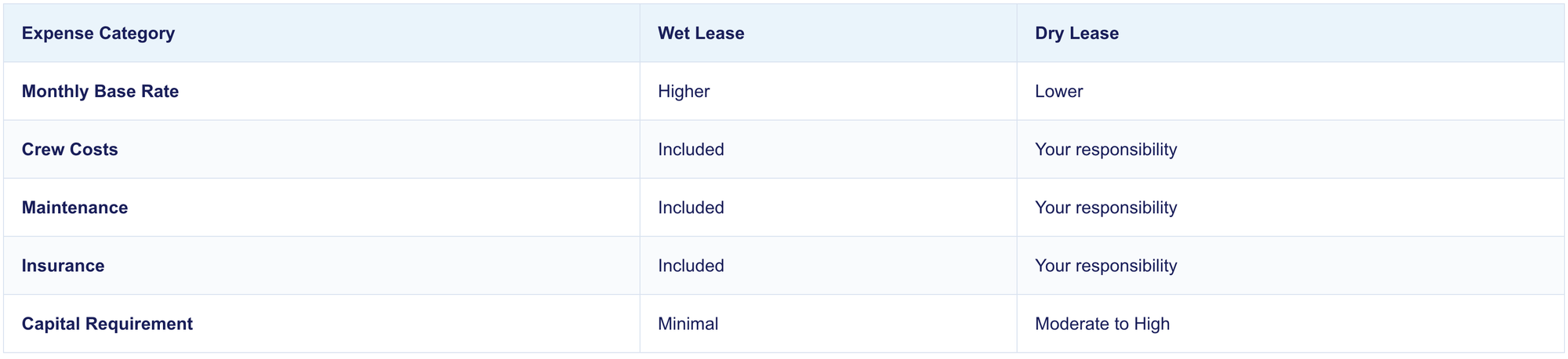
Capital preservation favors wet leasing for short-term needs or fleet expansion. You avoid large upfront investments in crew training and maintenance infrastructure.
Operational Flexibility and Risk
Dry lease agreements give you complete operational control. You schedule flights, select routes, and manage crew assignments according to your business needs. This flexibility allows you to adapt quickly to market demands and optimize aircraft utilization.
Wet lease arrangements limit your control since the lessor retains operational authority. You must coordinate with their crew scheduling and maintenance windows. This structure works well for temporary capacity needs or seasonal demand spikes.
Operational risk shifts significantly between these models. With wet leasing, the lessor assumes responsibility for crew performance, maintenance delays, and aircraft availability. You face minimal exposure to operational disruptions.
Dry leasing places operational risk squarely on your shoulders. Equipment failures, crew shortages, and maintenance issues directly impact your operations and revenue.
Crew and Maintenance Responsibilities
Wet lease agreements include crew provided by the lessor. The lessor handles pilot hiring, training, certification, and scheduling. Flight attendants and technical crew come as part of the package. You avoid recruitment costs and training program development.
Crew provision remains the lessor's legal responsibility throughout the lease term. They ensure crew members meet all regulatory requirements and maintain current certifications.
Dry lease arrangements require you to staff the aircraft completely. You must recruit, train, and certify all crew members under your operating certificate. This demands established HR processes and training infrastructure.
Aircraft maintenance under wet leasing stays with the lessor. They schedule inspections, perform repairs, and maintain airworthiness documentation. You simply report any operational issues to their maintenance team.
With dry leasing, you manage all maintenance activities. You must establish approved maintenance programs, hire qualified technicians, and maintain parts inventory.
Regulatory Standards and Oversight
Regulatory compliance differs substantially between wet lease and dry lease structures. Wet leasing operates under the lessor's Air Operator Certificate (AOC). The lessor maintains regulatory standards, submits required documentation, and undergoes aviation authority audits.
Your involvement in regulatory oversight remains minimal with wet leasing. You must still comply with operational regulations at your destinations, but the lessor handles most certification requirements.
Dry lease operations require the aircraft to fly under your AOC. You must meet all regulatory standards for maintenance, crew training, and operational procedures. Aviation authorities audit your operations directly.
This regulatory responsibility demands dedicated compliance staff and established quality systems. You need infrastructure to track airworthiness directives, maintain training records, and document safety management systems.
Both lease types must satisfy international aviation standards when operating across borders. However, dry leasing requires you to obtain all necessary foreign operator permits and approvals independently.
Alternative Leasing Structures and Industry Trends
Airlines and operators access several specialized leasing structures beyond standard wet and dry leases, each designed to address specific operational and financial needs. The aviation leasing market continues to evolve with hybrid models, ACMI arrangements, and leaseback agreements that help airlines manage fleet expansion and capital requirements.
Damp Lease and Hybrid Models
A damp lease sits between wet and dry leasing options. You get the aircraft with crew but must provide your own cabin crew and insurance. This arrangement gives you more control over passenger service while the lessor handles flight operations.
The model works well when you need operational support but want to maintain your brand identity. Your cabin crew can deliver your airline's service standards while experienced flight crew operate the aircraft.
Damp leases are less common than wet or dry leases but offer flexibility for specific situations. Airlines use them during crew shortages or when expanding into new markets where they lack pilot bases.
The Rise of ACMI Leasing
ACMI leasing stands for Aircraft, Crew, Maintenance, and Insurance. The lessor provides everything needed to operate the aircraft except fuel and airport fees. You pay by flight hours, making costs predictable and variable.
This leasing structure has grown significantly in recent years. Airlines use ACMI leasing to handle seasonal demand spikes, replace grounded aircraft, or launch new routes quickly without long-term commitments.
ACMI providers specialize in deploying aircraft and crews on short notice. You can add capacity within weeks rather than the months or years needed to purchase aircraft and hire staff. The model transfers operational risk to specialized leasing companies that maintain ready fleets and crew pools.
Leaseback Agreements and Capital Management
A leaseback agreement lets you sell aircraft you own to a leasing company and immediately lease them back. You convert aircraft equity into cash while continuing to operate the same planes. This transaction improves your balance sheet without disrupting operations.
Airlines use leasebacks to fund fleet expansion or reduce debt. The cash from selling aircraft can finance new routes, upgrade facilities, or strengthen working capital. You maintain operational control but shift ownership to specialized lessors.
Sale-leaseback deals have become a standard capital management tool. They separate aircraft ownership from operations, letting you focus on running an airline while leasing companies handle asset management. Your monthly lease payments replace the costs of aircraft ownership.
Aviation Leasing Market Overview
The aircraft leasing market now accounts for nearly half of all commercial aircraft worldwide. Leasing companies purchase planes from manufacturers and offer flexible terms to airlines of all sizes. This growth reflects how airlines prioritize operational flexibility over asset ownership.
Major leasing companies maintain diverse fleets and can offer competitive rates through economies of scale. You benefit from their purchasing power and maintenance expertise. The leasing market provides access to modern aircraft without the substantial upfront capital required for purchase.
Different leasing structures serve different needs. Established carriers typically prefer dry leases for long-term fleet planning. Smaller airlines and startups often choose wet leases or ACMI to enter markets quickly. Your choice depends on your operational capabilities, financial position, and growth strategy.
Global Leaders and Market Dynamics in Aircraft Leasing
The aircraft leasing market reached $207.1 billion in 2025 and is expected to grow to $354.5 billion by 2030. A few major companies control much of this market, and choosing the right partner requires careful evaluation of their services and track record.
Major Aircraft Leasing Companies
AerCap stands as the world's largest aircraft leasing company. They own and manage hundreds of aircraft across the globe. SMBC Aviation Capital ranks as another top player in the industry. They provide leasing solutions to airlines in multiple regions.
Air Lease Corporation also holds a significant market position. These three companies represent the dominant force in aircraft leasing. Together, they control a large portion of the global leasing market.
Other leasing companies operate in the market as well. They range from large international firms to smaller regional players. The top companies typically offer better rates and more aircraft options because of their size and purchasing power.
Selecting the Right Leasing Partner
You need to check a leasing company's financial stability first. A company with strong finances can better support long-term lease agreements. Look at their fleet size and aircraft types available. Larger fleets give you more options when you need specific aircraft models.
Review their maintenance standards and support services. Some leasing companies provide technical assistance and parts support. Others only handle the basic lease transaction. Your operational needs will determine which services matter most.
Compare lease terms and pricing across multiple companies. Don't focus only on the monthly payment. Consider the total cost over the lease period. Check if they offer flexible terms for early termination or lease extensions.
Future Directions and Innovations
The leasing market is moving toward more fuel-efficient aircraft. Companies are investing in newer models that reduce operating costs. This shift helps airlines meet environmental regulations while saving money on fuel.
Digital platforms are changing how leasing transactions work. Some companies now offer online tools for lease management and maintenance tracking. These systems make it easier for you to monitor your leased aircraft.
Sale-leaseback arrangements are becoming more common. Airlines sell aircraft they own and lease them back to free up capital. This trend is expected to grow as more carriers seek financial flexibility. The market will likely see continued consolidation as larger leasing companies acquire smaller ones.
Frequently Asked Questions
Wet and dry leases differ in who provides crew, maintenance, and operational control, which directly affects costs, responsibilities, and how long agreements typically last.
What is a wet lease in aviation, and what services are typically included?
A wet lease is a full-service aircraft rental where the lessor provides everything you need to operate the plane. This includes the aircraft itself, the complete crew, maintenance services, and insurance coverage.
You receive what's called ACMI service, which stands for Aircraft, Crew, Maintenance, and Insurance. The lessor handles all technical and staffing requirements while you focus on your passengers and routes.
What is a dry lease in aviation, and what responsibilities does the lessee assume?
A dry lease gives you just the aircraft without any crew or services. You take full operational control of the plane for the lease period.
You must provide your own pilots and cabin crew. You also handle all maintenance scheduling and costs. Insurance becomes your responsibility, and you must ensure the aircraft meets all regulatory requirements under your operating certificate.
Who provides the crew, maintenance, and insurance under a wet lease compared to a dry lease?
Under a wet lease, the aircraft owner provides all crew members, performs all maintenance work, and carries the insurance policy. The lessor keeps operational control and regulatory responsibility for the aircraft.
Under a dry lease, you provide your own crew and manage your own maintenance program. You must secure insurance coverage for the aircraft. Operational control and regulatory responsibility transfer to you as the lessee.
Who pays for fuel and other operating costs under a wet lease versus a dry lease?
With a wet lease, you typically pay for fuel, airport fees, and landing charges. The lessor covers crew salaries, maintenance costs, and insurance as part of the lease rate.
With a dry lease, you pay for everything. This includes fuel, all operating expenses, crew salaries, maintenance, insurance, and any other costs associated with flying the aircraft.
Which situations typically favor choosing a wet lease instead of a dry lease?
You should consider a wet lease when you need temporary capacity increases during peak seasons. It works well when you lack qualified crew or maintenance infrastructure for a specific aircraft type.
Wet leases help you meet sudden demand without long-term commitments. Airlines use them to cover aircraft that are temporarily out of service for maintenance. They're also useful when you need to test new routes before committing to permanent expansion.
How long does a wet lease agreement typically last, and what factors determine the duration?
Wet lease agreements usually last from a few weeks to several months. Some extend up to two years depending on your operational needs.
The duration depends on why you need the aircraft. Seasonal demand increases might require three to six months. Covering maintenance periods for your own aircraft might need only weeks. Route testing could take several months to gather enough data for your decisions.