
10 Most Fuel-Efficient Private Jets in 2026 Ranked by Efficiency

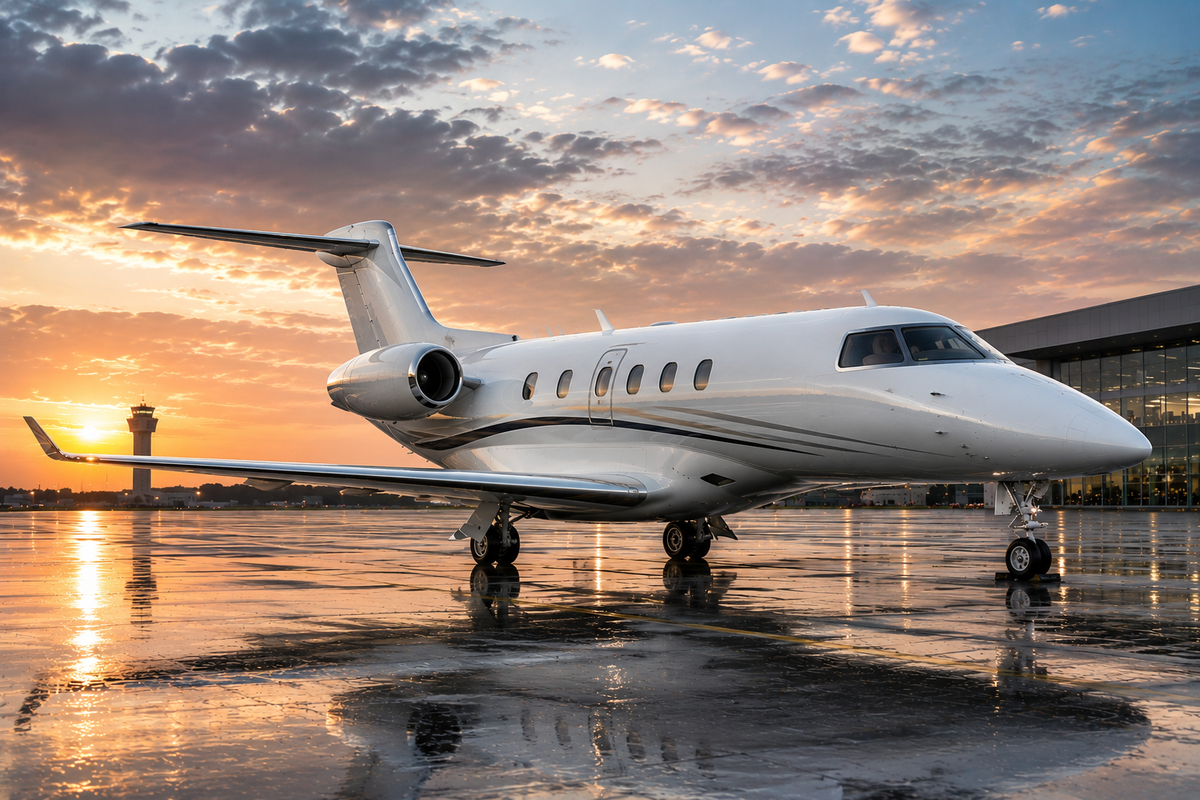
Fuel-efficient private jets help cut trip costs and shrink the carbon footprint of private aviation. The most fuel-efficient private jets in 2026 match aircraft size, range, and passenger capacity to your actual mission.
That way, you don’t waste fuel on unused capability.
You'll notice fuel consumption varies across very light, light, midsize, super-midsize, and long-range business jets. The comparison also looks at fuel burn per hour, fuel burn per passenger, range, and real operating costs.
Your aircraft choice is only part of the equation. Flight planning, maintenance, loading, and sustainable aviation fuel can also improve efficiency and lower emissions.
How Private-Jet Fuel Efficiency Is Measured
One number alone won't compare private-jet fuel use. Fuel burn, distance, passenger load, and flight conditions all affect what you pay for Jet-A fuel.
Gallons Per Hour Versus Nautical Miles Per Gallon
Gallons per hour (GPH) shows how much fuel an aircraft burns each hour in flight. It’s useful for estimating hourly operating costs, especially with Jet-A prices jumping around like they did in April 2026.
A very light jet might use about 100 to 150 gallons per hour. Large-cabin or ultra-long-range jets can burn several hundred gallons each hour. GPH alone doesn't show how far you’ll get for that fuel.
Nautical miles per gallon (nm/gal) tells you the distance traveled for every gallon of jet fuel. You get it by dividing cruising speed by fuel burn rate.
| Measure | What it tells you | Best use |
|---|---|---|
| Gallons per hour | Fuel used during one flight hour | Estimating hourly fuel cost |
| Nautical miles per gallon | Distance traveled per gallon | Comparing aircraft on similar trips |
For example, if an aircraft cruises at 400 knots and burns 160 GPH, you get about 2.5 nm/gal. Just make sure you compare numbers at similar speeds and flight stages. Fuel burn for climb is way higher than during cruise.
Why Fuel Per Passenger And Mission Fit Matter
A jet with low fuel use isn’t always the best pick for your trip. You should also think about fuel per passenger, which divides total trip fuel by the number of people on board.
A midsize jet may burn more fuel than a light jet, but it can use less per passenger if you fill more seats. Passenger capacity, baggage, and cabin needs matter because an oversized aircraft hauls extra weight and burns more fuel than you really need.
Mission fit plays a big role too. A small jet might be great for a short hop with four people, but it may need a fuel stop on a longer route. That adds fuel use, time, and airport fees.
Choose an aircraft that can complete your route with suitable reserves, payload, and passenger space. Usually, the most efficient option is the smallest jet that safely meets your needs.
Variables That Change Real-World Fuel Burn
Published fuel figures are just estimates for planning. Your actual fuel burn shifts with aircraft weight, route, weather, and operating choices.
A heavier aircraft burns more fuel during takeoff and climb. Extra passengers, bags, catering, and fuel all add up. Flying faster also uses more fuel, while a slightly lower speed can save some on certain jets.
Headwinds increase flight time and total fuel use, even if the per-hour burn stays the same. Tailwinds can boost your nautical miles per gallon. Air traffic delays, rerouting, holding, and lower cruising altitudes can also eat into efficiency.
Good flight planning helps manage these factors. You can cut unnecessary fuel use by picking practical departure times, direct routes, the right cruising altitude, and an aircraft that fits the trip.
The Lowest-Burn Very Light And Light Jets
Very light jets and small light jets use less fuel than bigger business aircraft because they’re lighter and use smaller engines. Your real fuel use still changes with speed, altitude, passenger load, weather, and trip length.
Cirrus Vision Jet SF50
The Cirrus Vision Jet SF50 is a single-engine VLJ made for owner-pilots and short business hops. Its Williams FJ33 turbofan sips fuel compared to twin-engine designs, usually burning about 50–60 gallons per hour in cruise.
You can seat up to seven, though lighter loads help fuel use and range. The range is about 1,200 nautical miles under good conditions.
Cirrus also includes a whole-aircraft parachute system. If you want lower fuel bills, simpler single-engine operation, and a compact cabin, the Cirrus SF50 is a strong fuel-efficient private jet pick.
HondaJet HA-420 Elite II
The HondaJet HA-420 Elite II is a very light jet with two GE Honda HF120 turbofans. It typically burns about 100–120 gallons per hour in cruise, depending on altitude and speed.
Its over-the-wing engine mount puts the engines above the wings instead of at the back. This design saves cabin space and cuts cabin noise, while helping the HondaJet’s efficient aerodynamics.
You can carry up to six, including the pilot, though four passengers is most comfortable. With a range of roughly 1,500 nautical miles, the HondaJet Elite II works well for regional trips where you want jet speed but not light-jet fuel burn.
Embraer Phenom 100EV
The Embraer Phenom 100EV is a twin-engine VLJ built for owner-pilots, charter, and short corporate flights. Its two Pratt & Whitney PW615F engines usually burn around 100–110 gallons per hour during cruise.
The cabin seats four in a typical layout, plus there’s an enclosed lavatory. The Phenom 100 also has solid baggage space for its size, which matters if you’re traveling with several people and overnight bags.
Range is about 1,100 nautical miles, so think Dallas to Denver or London to Nice, depending on weather and load. The Phenom 100EV offers modest fuel use along with the peace of mind of two engines.
Cessna Citation M2 Gen2
The Cessna Citation M2 Gen2 sits at the top of the VLJ market and just inside the light jet category. Its Williams FJ44-1AP-21 engines typically burn about 120–130 gallons per hour in cruise.
That’s more than the smallest VLJs, but the M2 gives you more speed and payload. It can cruise near 400 knots and has a range of about 1,550 nautical miles.
You can carry up to six, but four or five is more practical for longer flights. If you need a light jet with a good mix of speed, range, and economy, the Citation M2 is a sensible option.
Embraer Phenom 300E
The Embraer Phenom 300E is a light jet, not a VLJ, so it burns more fuel than the others above. Its twin Pratt & Whitney PW535E engines typically use about 150–170 gallons per hour in cruise, depending on how fast you push it.
You get a lot more capability, though. The Phenom 300E can carry up to ten, cruise near 450 knots, and fly about 2,000 nautical miles in good conditions.
For longer regional trips, its fuel use still compares well with bigger midsize jets because it moves more people farther at high speed. The Phenom 300E is a good fit if you want a fuel-efficient jet but aren’t willing to give up light-jet cabin space and range.
Efficient Midsize And Super-Midsize Choices
These jets balance range, cabin space, and fuel use for trips that don’t require a large-cabin jet. The best choice depends on passenger count, runway access, trip distance, and maintenance needs.
Cessna Citation CJ4 Gen2
The Cessna Citation CJ4 Gen2 is a light jet, but it often competes with smaller midsize jets on short and medium routes. Its two Williams FJ44-4A turbofans support efficient flight and cruise speeds near 450 knots.
Range is about 2,165 nautical miles in good conditions. That covers trips like New York to Miami or Los Angeles to Chicago, though winds, passengers, and bags can cut into that.
The CJ4 Gen2 carries up to 10, but six to eight is more comfortable and gives you better baggage flexibility. Its lower fuel use and simpler systems can help keep operational costs down compared to bigger midsize jets.
Pilatus PC-24
The Pilatus PC-24 is a light jet with unusual flexibility. Its two Williams FJ44-4A engines provide a range of about 2,040 nautical miles, and the design lets it operate from shorter runways and even some unpaved strips.
That can save you ground travel time if your destination doesn’t have a major airport. The large cargo door lets you haul bulky gear, luggage, or supplies that many jets just can’t handle.
The PC-24 doesn’t have the range of super midsize jets, but it can deliver fuel savings on regional missions. You’ll want to consider its specialized maintenance if you plan to use its rough-field capability a lot.
Bombardier Challenger 3500
The Bombardier Challenger 3500 is a super midsize jet built for longer business trips with a wide, comfy cabin. It uses two Honeywell HTF7350 turbofans and has a published range of about 3,400 nautical miles.
You can fly routes like New York to Los Angeles with fewer fuel stops than in a midsize jet. The cabin seats up to 10 and offers more room for work, rest, and baggage than light-jet options.
Fuel use is higher than a Citation CJ4 Gen2 or PC-24, but you get better trip efficiency when you need the range and capacity. The Challenger 3500 builds on the popular Challenger 350, so maintenance planning is familiar for many operators.
Gulfstream G280
The Gulfstream G280 is a super midsize jet known for strong range and efficient high-altitude performance. Two Honeywell HTF7250G engines power it, and you get a published range of about 3,600 nautical miles.
That covers many nonstop transcontinental flights and some international routes. You can carry up to 10, though fewer people means more flexibility for bags and fuel.
The G280 replaced the older G200 with better engines, wings, and cabin systems. Its price and maintenance costs can be higher than midsize jets, but the fuel savings per long mission may make sense if you can skip a fuel stop or avoid chartering a heavier jet.
Long-Range Efficiency Without Oversizing The Aircraft
You can cut fuel use by matching aircraft size and passenger count to your actual routes. A heavy jet with more range than you need just hauls extra weight, burns more fuel, and raises costs.
Dassault Falcon 8X
The Dassault Falcon 8X gives you ultra-long-range capability without the giant cabin of the very largest private jets. It can fly about 6,450 nautical miles and usually carries 12 to 16 passengers, depending on the cabin layout.
Its three engines let it operate at more airports than some bigger long-range jets, including those with short runways or special restrictions. That can get you closer to your destination and save you a ground transfer.
For luxury trips, the Falcon 8X offers three cabin zones, a low cabin altitude, and a big baggage compartment. You get space for work, rest, and dining—without having to move up to an aircraft sized for 18 or 19 travelers.
The 8X is a smart pick if your trips often include transatlantic routes, like New York to London, or longer flights with a small group. It helps you avoid the fuel burn and price tag of an aircraft built for a much bigger crowd.
How The Falcon 900LX And Gulfstream G650 Compare
The Dassault Falcon 900LX is a smaller option if you don’t need the Falcon 8X’s full range. It covers about 4,750 nautical miles and typically seats 12 to 14 passengers.
You can fly the 900LX on routes like New York to Los Angeles, London to Dubai, or Paris to New York under the right conditions. Its lighter profile and smaller size often make sense when nonstop flights beyond those distances aren’t required.
| Aircraft | Approximate Range | Typical Passenger Capacity | Best Fit |
|---|---|---|---|
| Dassault Falcon 900LX | 4,750 nautical miles | 12–14 | Long regional and transatlantic trips |
| Dassault Falcon 8X | 6,450 nautical miles | 12–16 | Long global routes with smaller groups |
| Gulfstream G650 | 7,000 nautical miles | 14–19 | High-capacity, ultra-long-range travel |
The Gulfstream G650 offers more range and a bigger cabin, but honestly, it can feel like overkill if you’re flying with six to 10 people. If your usual trips fit within the Falcon 8X or 900LX range, picking the smaller jet saves fuel and still keeps things comfortable.
Engineering And Operational Levers That Cut Fuel Use
Fuel-efficient jets mix low-drag design, efficient engines, and strict weight control. Your flight planning and maintenance choices also impact fuel burn every time you fly.
Advanced Aerodynamics And Wing Design
Aerodynamics decide how much thrust your plane needs to stay fast and high. A clean design reduces drag, so you burn less fuel during climb, cruise, and descent.
Modern jets use winglets or similar devices to cut vortex drag. These help with cruise efficiency, especially on long flights where even small fuel savings add up.
Swept wings, smooth joints, and tightly fitted panels also cut down on drag. You’ll get the best results when you fly near the jet’s efficient cruise range.
Flying much faster than recommended speeds just increases drag and fuel use. Sometimes, cruising a bit slower stretches your range and brings down your operating cost—if your schedule allows it.
Engine Efficiency, Composites, And Weight Reduction
New engines boost efficiency with higher bypass ratios, better compressor designs, and smarter digital controls. These upgrades let engines use less fuel for the same thrust, especially at cruise.
Advanced composites help reduce weight. They replace heavier metal parts in the fuselage, control surfaces, and interiors while staying strong.
Less weight means less lift and thrust required. Managing weight on every flight matters—cut unnecessary baggage, equipment, and extras when you can.
Newer jets usually benefit from lighter structures and better engines, but a well-kept older jet can still run efficiently. Age isn’t everything, but it’s a factor.
Route Planning, Payload, And Maintenance Discipline
Good flight planning helps you dodge fuel-wasting situations. You can pick cruise altitudes and routes that avoid headwinds, use tailwinds, and skip delays at busy airports.
Dispatchers figure out the right fuel load for each trip, considering weather, alternates, and reserves. Carrying extra fuel adds weight, so you burn more—but you still need to meet safety margins.
Maintenance keeps efficiency up. Clean compressors, proper tire pressure, smooth surfaces, and aligned landing gear all help avoid unnecessary drag.
Fix those little things—damaged seals, loose fairings, worn door edges—since even small defects can bump up your fuel use over time.
Reducing Lifecycle Emissions Beyond Aircraft Selection
Most of a private jet’s lifecycle emissions come from fuel burn. You can cut your carbon footprint further with smarter fuel choices, better planning, fuller cabins, and the right kind of access.
Sustainable Aviation Fuel And Carbon Accounting
Sustainable aviation fuel (SAF) can lower lifecycle greenhouse gas emissions compared to fossil jet fuel. The actual reduction depends on the feedstock, how it’s made, and how the supplier measures emissions.
Most SAF today is a drop-in blend. Operators mix it with regular jet fuel under approved limits, so it works in today’s jets with no engine mods.
Availability is still spotty at many private airports, and SAF usually costs more than the standard stuff. If you care about your flight’s carbon impact, ask your operator for clear details:
- How much SAF is bought or assigned to your flight
- The fuel’s production pathway and claimed emissions reduction
- Whether a verified certificate system backs the claim
- Proof that nobody else will claim the same reduction
Carbon offsets support projects outside aviation, but they don’t actually cut emissions from your flight. For greener travel, direct fuel savings, SAF use, and fewer unnecessary legs matter more than just buying offsets.
When Turboprops Or Jet Access Programs Make More Sense
On short trips, a turboprop often burns less fuel than a light jet while carrying about the same number of people. The Pilatus PC-12, including the NG series, is a single-engine option that’s popular for regional business and smaller airports.
The Beechcraft King Air 350 carries more passengers and runs on two engines, but it’s still a better fit for many short and mid-range missions than a bigger jet.
A Cessna Citation Mustang works if you want jet speed for a small group, though it’s different in fuel use and cabin space compared to a turboprop.
Match your aircraft to your mission. Don’t just grab the biggest cabin—flying with empty seats means more emissions per person.
A full aircraft is better for the planet. Using a jet card or charter program can also skip the fixed costs and emissions of owning a jet that sits idle most of the year.
Before you book with a provider like JetCharter.com, ask about aircraft type, passenger capacity, positioning flights, and if they offer SAF.
The Next Steps For Sustainable Aviation
You can start cutting fuel use right now by planning nonstop routes when possible, packing lighter, and skipping unnecessary repositioning flights. Operators can use planning software to pick efficient altitudes, speeds, and routes within ATC limits.
Newer engines and better aerodynamics help, but they don’t erase aviation emissions. Electric propulsion might work for some short hops down the road, but batteries just aren’t there yet for most private jets—at least not by 2026.
Keep track of your flights—aircraft, routes, fuel used, passengers, SAF volume. It’s a more useful way to measure your carbon reduction than just counting miles.
Take a look at your travel needs each year. Sometimes, switching a low-occupancy jet trip to a turboprop, a shared charter, or even a commercial flight can save money and emissions.
Frequently Asked Questions
The best jet for you depends on trip length, passenger count, and speed needs. Light jets burn a lot less fuel per hour than large cabins, while ultra-long-range jets can skip fuel stops on big trips.
Which private jet is the most fuel-efficient in 2026?
The Cirrus Vision Jet SF50 is one of the most fuel-efficient private jets for short hops. Its single Williams FJ33 engine sips fuel compared to the twin engines on most business jets.
You’ll burn about 50 to 60 gallons per hour in cruise, depending on altitude, speed, weather, and how much you’re carrying. It’s best for trips of 500 to 1,000 nautical miles with a small group.
There’s no universal winner—bigger jets use more fuel per hour but might need fewer stops on long trips.
What is the most economical private jet to operate?
The Cirrus Vision Jet SF50 is often among the most economical aircraft to own. Its single-engine design, low fuel use, and small size keep operating costs down.
For a classic light jet, the HondaJet Elite II is also strong on fuel economy. It carries more people than the Vision Jet and uses efficient over-the-wing engines that cut cabin noise and drag.
Actual costs depend on how much you fly. Don’t forget to factor in maintenance, insurance, hangar space, crew, training, and engine reserves.
How much does a fuel-efficient private jet cost in 2026?
A new fuel-efficient very light jet usually runs about $4 million to $8 million in 2026. Used jets can be cheaper, but age, engine hours, maintenance, and equipment all change the price.
A new Cirrus Vision Jet is usually on the lower end of that range. The HondaJet Elite II costs more, since it’s bigger, faster, and has two engines.
Remember to budget for annual costs on top of the sticker price. Even a small jet can eat up hundreds of thousands per year in operating and upkeep.
Is the Cirrus Vision Jet SF50 efficient for private ownership?
The Cirrus Vision Jet SF50 works well if you usually fly solo or with up to three passengers on short regional trips. Its fuel burn is low for a jet, and you can even fly it yourself with the right training.
Cabin, baggage, speed, and range are all more limited than a classic light jet. If you often travel with four or more adults, go long distances, or need to fly in rough weather with extra reserves, you’ll need something bigger.
The Vision Jet also comes with the Cirrus Airframe Parachute System—a safety feature owner-pilots really like. Still, compare its total ownership cost to chartering before you jump in.
How do the Gulfstream G800 and Bombardier Global 8000 compare on fuel efficiency?
The Gulfstream G800 and Bombardier Global 8000 are both ultra-long-range jets with advertised ranges around 8,000 nautical miles. They burn a lot more fuel per hour than light jets since they carry more people, more bags, and a ton more fuel.
The G800 runs on two Rolls-Royce Pearl 700 engines. The Global 8000 uses two GE Passport engines. Both have advanced wing design, efficient engines, and high-altitude cruise to help with long-range performance.
Compare trip fuel, not just hourly burn. Things like wind, cruise speed, passenger load, alternate fuel, and route length can make one jet use less fuel than the other for a specific trip.
What factors determine a private jet’s fuel consumption and operating costs?
Aircraft size and engine type have the biggest impact on fuel burn. A single-engine very light jet burns way less fuel than a big twin-engine cabin jet.
Your route really matters too. Strong headwinds or short hops can make you use more fuel.
Flying low, holding in the air, or needing extra reserves will also push up fuel use. It’s not just about fuel, though.
You’ve got to pay for crew, maintenance, insurance, and hangar space. There are navigation and landing fees, engine programs, and, unfortunately, depreciation.
If you pick a jet that fits your usual trips, you’ll probably spend less on both fuel and the whole operation.