
10 Best Turboprop Private Jets for Short-Haul Luxury Travel
Compare 10 leading turboprop private aircraft for short-haul luxury travel, from the PC-12 PRO and King Air 360 to the TBM 960 and Avanti EVO.

Turboprop Private Jet: The Strategic Choice for Short-Haul Luxury Travel
2 October 2026 · ACMI World
For many private aviation missions, the smartest aircraft is not necessarily a jet. Modern turboprops can combine executive cabins, pressurization, sophisticated avionics and high cruise speeds with access to airports that are impractical for many conventional business jets.
That makes the category particularly compelling for journeys of a few hundred nautical miles, regional business travel, island destinations, ski resorts, secondary cities and locations where the airport closest to the final destination matters more than maximum cruise speed.
“Turboprop private jet” is a common search term, but these aircraft use turbine engines to drive propellers rather than relying primarily on jet thrust. For passengers, however, the best modern examples can provide a private aviation experience that competes directly with light business jets on shorter routes.
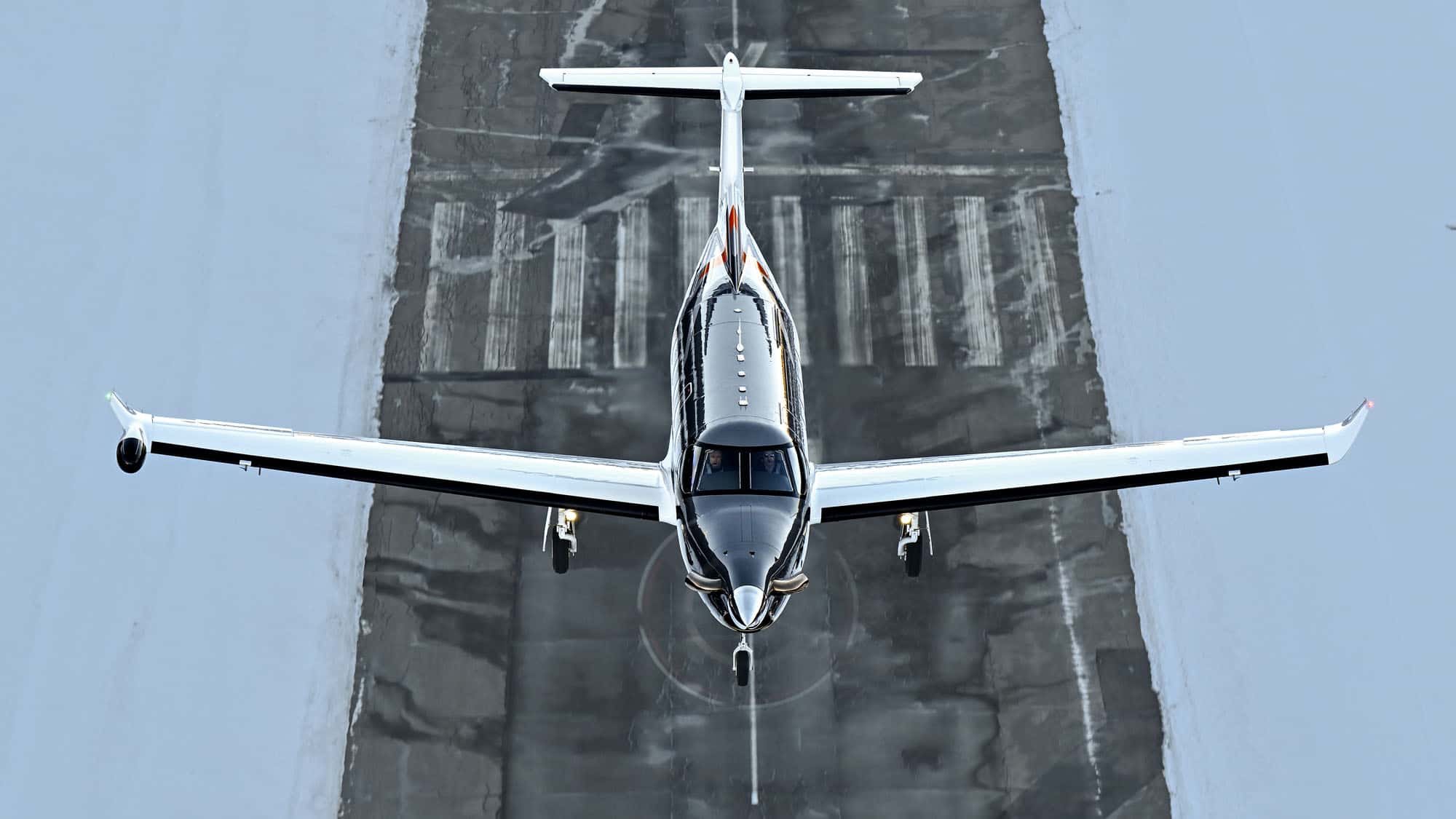
Why turboprops work so well for short-haul private travel
Jet speed matters most once an aircraft has enough distance to exploit it. On a short regional sector, airport positioning, taxi time, climb, descent and ground transport can consume a large percentage of the total journey.
Top 10 turboprop private aircraft
This ranking is mission-weighted rather than simply ordering aircraft by maximum speed. Cabin usability, airport access, range, passenger experience, current technology and usefulness on real private travel missions all matter.
Pilatus PC-12 PRO
The PC-12 PRO is arguably the clearest demonstration of why a turboprop can be more useful than a light jet. It combines a large executive cabin, sizable cargo door, pressurization and long range with the ability to operate from short and unimproved runways.
The latest PRO generation adds the Garmin G3000 Prime-based Advanced Cockpit Environment, digital autothrottle and Safety Autoland while retaining the PC-12 family's unusual combination of passenger comfort and utility.
Best suited to: owners, corporate departments, charter operators and families that want one aircraft to cover executive travel, leisure missions and difficult airports.
Beechcraft King Air 360
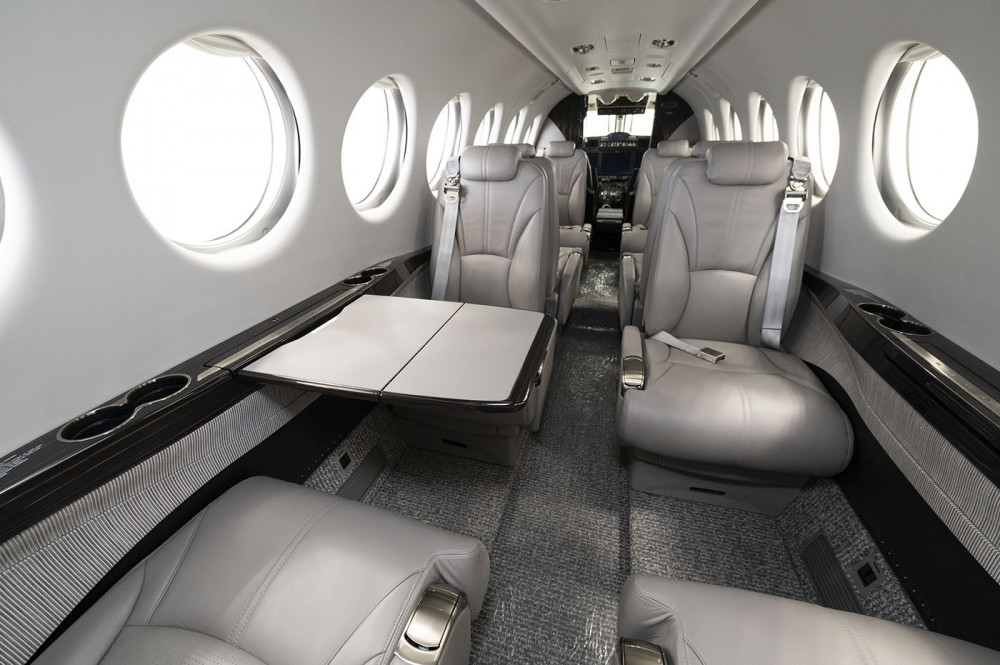
Few turboprops have a business aviation identity as established as the King Air. The 360 combines two Pratt & Whitney Canada PT6A-60A engines with a substantial pressurized cabin, executive seating and a 35,000-foot operating altitude.
Best suited to: corporate travel, family offices, government transport and buyers who value the redundancy and cabin presence of a twin-engine aircraft.
Piaggio P.180 Avanti EVO
The Avanti EVO is the outlier in this list. Its rear-mounted pusher propellers and three-surface aerodynamic configuration produce performance closer to light-jet territory than a conventional turboprop.
Its wide passenger cabin is another major distinction. For travelers who want turboprop economics but dislike the idea of sacrificing cabin size or cruise performance, the Avanti remains one of aviation's most unusual solutions.
Best suited to: fast regional executive missions where cabin width and cruise speed are high priorities.

Daher TBM 960
The TBM 960 is built around speed. Daher combines the digitally controlled PT6E-66XT with a five-blade composite propeller and a compact pressurized cabin capable of moving a small party at genuinely serious cross-country speeds.
Best suited to: owner-pilots and small traveling parties who prioritize speed, efficiency and access to smaller airports over a large cabin.
Epic E1000 AX
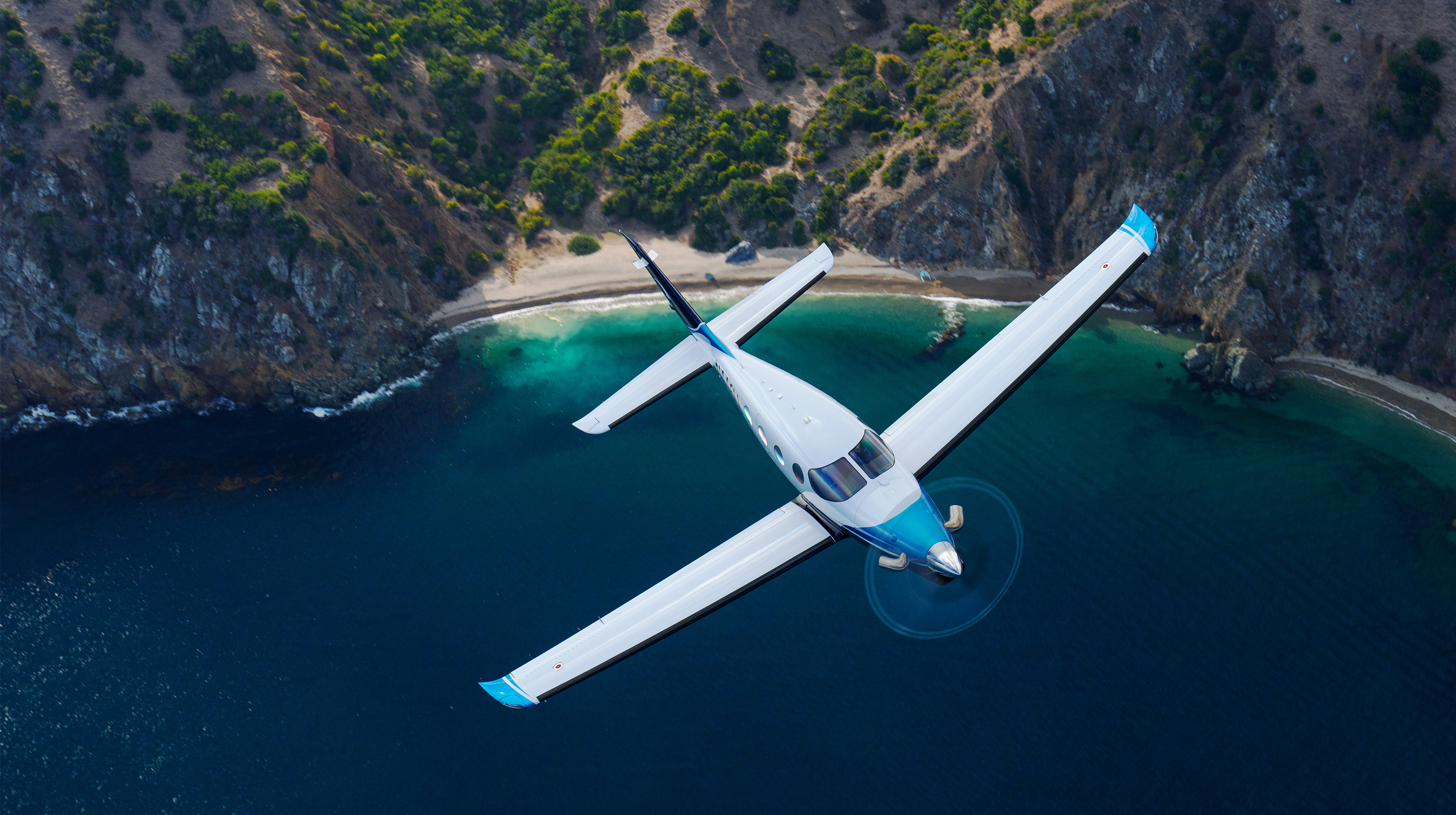
Carbon-fiber construction, a 1,200-shaft-horsepower PT6A-67A and a 333-knot maximum cruise make the E1000 AX one of the most performance-oriented turboprop singles available.
The six-seat aircraft also targets sophisticated private owners with modern automation, Garmin avionics and a high rate of climb.
Best suited to: buyers who want near-light-jet travel times while retaining single-engine turboprop operating characteristics.
Beechcraft King Air 260
The King Air 260 provides much of the appeal of the larger 360 in a more compact package. It retains twin PT6 power, Pro Line Fusion avionics, digital pressurization and autothrottle while offering strong short-field performance.
Best suited to: regional corporate flying where reliability, cabin usability and access to smaller airports matter more than raw jet speed.
Piper M700 Fury
Piper's flagship M-Class turboprop combines a 700-shaft-horsepower PT6A-52 with Garmin G3000 avionics and the HALO safety system, including Emergency Autoland.
It is particularly compelling for buyers moving upward from piston aircraft who want turbine performance without immediately moving into a larger aircraft and crew structure.
Best suited to: private owners who prioritize modern avionics, speed and efficient six-seat travel.
Daher Kodiak 900
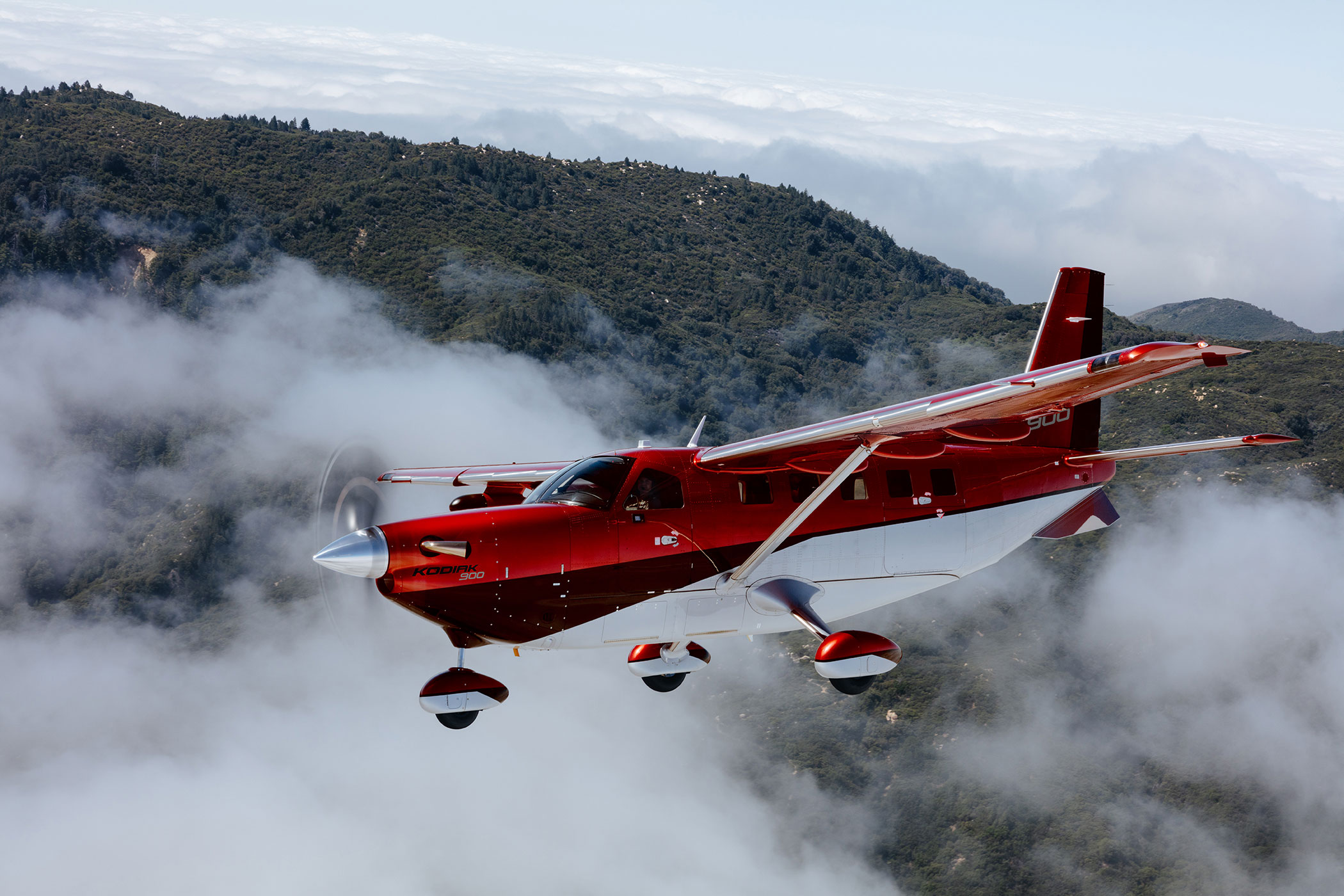
The Kodiak 900 approaches luxury travel from a completely different direction. It is slower than the pressurized high-performance singles, but provides extraordinary access to remote locations, short strips and destinations that can turn the last stage of a conventional private-jet journey into a lengthy ground transfer.
Best suited to: lodges, estates, islands, remote resorts, adventure travel and owners who need substantial payload with short-field access.
Piper M500
Not every private traveler needs a 300-knot aircraft. The M500 retains the fundamentals that make the M-Class attractive: a pressurized six-seat cabin, proven PT6 power and Garmin avionics, while targeting a different acquisition and operating profile from the faster M700.
Best suited to: shorter owner-flown business and leisure missions where acquisition discipline matters alongside turbine capability.
Cessna Grand Caravan EX
A Grand Caravan EX is not intended to imitate a light jet. Its strength is that it can solve missions a conventional private jet cannot solve efficiently at all.
Executive interiors can turn the aircraft into a highly practical private transport platform while retaining the Caravan's enormous baggage capability, large cabin, high wing and rugged operating characteristics.
Best suited to: islands, remote communities, safari operations, large baggage loads, sports equipment and short regional sectors.
The comparison at a glance
| Aircraft | Max speed | Published range | Mission strength |
|---|---|---|---|
| PC-12 PRO | 290 KTAS | 1,765 nm | Overall versatility |
| King Air 360 | 312 KTAS | 1,806 nm | Twin-engine executive travel |
| Avanti EVO | 402 KTAS | 1,720 nm | Jet-like speed |
| TBM 960 | 330 KTAS | 1,730 nm | Fast personal transport |
| E1000 AX | 333 KTAS | 1,560 nm | Performance |
| King Air 260 | 310 KTAS | 1,720 nm | Corporate regional travel |
| M700 Fury | 301 KTAS | 1,852 nm | Modern owner-flown missions |
| Kodiak 900 | 210 KTAS | 1,129 nm | Remote access |
| Piper M500 | 260 KTAS | 1,000 nm | Efficient pressurized travel |
| Grand Caravan EX | 185 KTAS | 912 nm | Payload and utility |
The real question is not “turboprop or jet?”
The better question is which aircraft minimizes total journey time for the actual mission. A jet that lands 90 minutes from the final destination can lose its speed advantage to a turboprop that lands 15 minutes away. For short-haul private aviation, airport access can be as valuable as cruise speed.
Choosing the right turboprop
For regular corporate travel between established airports, the King Air 260 and 360 provide the familiarity and redundancy of twin-engine platforms. For speed-focused private ownership, the TBM 960, E1000 AX and M700 Fury move significantly faster than the traditional image of a turboprop suggests.
The PC-12 PRO becomes particularly compelling when one aircraft must cover a wide variety of missions. At the other end of the mission spectrum, the Kodiak 900 and Grand Caravan EX demonstrate why runway capability can completely change the economics and practicality of reaching remote destinations.
The right comparison therefore needs to include passenger count, baggage, runway length, weather, sector distance, airport location, crew requirements and annual utilization rather than relying on cruise speed alone.
Frequently asked questions
Is a turboprop a private jet?
Technically, no. A turboprop uses a turbine engine to drive a propeller. However, premium turboprops compete directly with private jets for many business and leisure missions.
Are turboprops good for luxury travel?
Yes. Aircraft such as the PC-12 PRO, King Air 360, Avanti EVO and TBM 960 offer executive interiors, pressurized cabins and sophisticated avionics while retaining the operational advantages of turboprop propulsion.
When is a turboprop preferable to a private jet?
It can make particular sense on shorter regional routes, when the destination has a short runway, when access to secondary airports reduces ground travel, or when payload and operating flexibility are more important than maximum cruise speed.
What is the fastest aircraft on this list?
The Piaggio Avanti EVO has a published maximum speed of 402 KTAS, putting it unusually close to business-jet cruise performance for a propeller-driven aircraft.
Need an aircraft for your next operation?
Blue Cube Aviation supports aircraft leasing enquiries across commercial, ACMI and specialist aviation requirements.
Request an Aircraft Leasing Quote →

