
Pilatus PC-12 NGX vs King Air 360 Cost and Capability
Compare the PC-12 NGX and King Air 360 on range, speed, cabin size, payload, runway access, fuel burn, operating costs and 2026 buying considerations.

One Engine or Two Is Only Part of the Decision
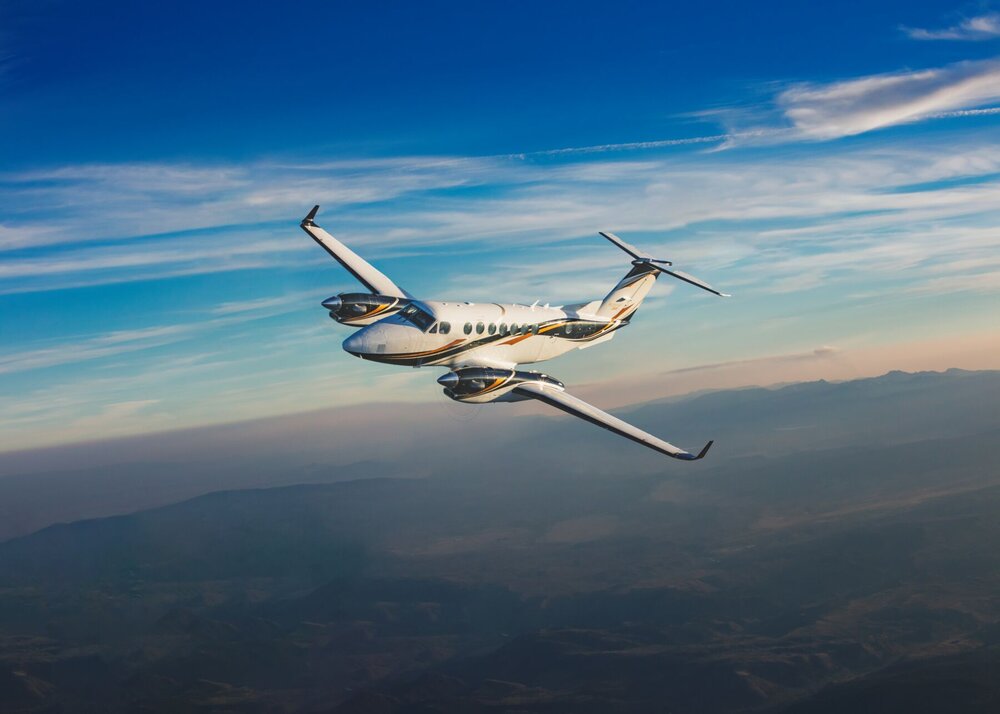
The Pilatus PC-12 NGX and Beechcraft King Air 360 are frequently compared because both can move executive passengers, baggage and equipment into airports that are impractical for many business jets.
They solve the mission differently. The PC-12 NGX uses one Pratt & Whitney turboprop engine, a five-foot-wide cabin, a large cargo door and comparatively low fuel consumption. The King Air 360 uses two engines, cruises faster, carries materially more payload with full fuel and provides a longer passenger cabin.
For a buyer, the decision usually comes down to operating economics, passenger and cargo requirements, airport access, mission length and whether twin-engine redundancy is important enough to justify the additional acquisition and operating expense.
ACMI World also covers Pilatus PC-12 charter and how aircraft such as the PC-12 fit into a properly defined aircraft mission profile .

The Short Answer
The PC-12 NGX is the stronger economic and utility proposition. It burns substantially less fuel, has the wider cabin, requires less runway and can operate from surfaces that would make many conventional business aircraft unsuitable.
The King Air 360 is faster, has a longer cabin, carries much more payload with maximum fuel and gives buyers the redundancy of two engines. Buyers who regularly carry heavier passenger loads or place particular value on twin-engine operations have a strong reason to accept its higher operating cost.
PC-12 NGX Cruise
290 KTAS
King Air Cruise
312 KTAS
PC-12 Takeoff
2,485 ft
King Air Takeoff
3,300 ft
PC-12 NGX vs King Air 360 Specifications
| Specification | Pilatus PC-12 NGX | Beechcraft King Air 360 |
|---|---|---|
| Engines | 1 × Pratt & Whitney PT6E-67XP | 2 × Pratt & Whitney PT6A-60A |
| Maximum cruise speed | 290 KTAS | 312 KTAS |
| Published maximum range | 1,803 nm with 4 passengers | 1,806 nm maximum range |
| Comparable 4-passenger range | Approx. 1,538 nm | Approx. 1,533 nm |
| Maximum payload | 2,236 lb | 2,545 lb |
| Payload with full fuel | 988 lb | 1,534 lb |
| Cabin width | 5 ft 0 in | 4 ft 6 in |
| Cabin height | 4 ft 10 in | 4 ft 9 in |
| Cabin length | 16 ft 11 in | 19 ft 6 in |
| Cabin volume | 330 cu ft | 344 cu ft |
| Baggage capacity | 40 cu ft internal compartment | 71.3 cu ft |
| Takeoff distance | 2,485 ft over 50-ft obstacle | 3,300 ft field length |
| Maximum altitude | 30,000 ft | 35,000 ft |
One Engine Versus Two Changes the Economics
The most obvious difference is also the one that affects almost every ownership calculation.
The PC-12 NGX uses a single Pratt & Whitney Canada PT6E-67XP producing 1,200 shaft horsepower for takeoff. The King Air 360 uses two PT6A-60A engines rated at 1,050 shaft horsepower each.
Two engines give the King Air more installed power and engine redundancy. They also mean two engines to fuel, inspect, maintain and eventually overhaul.
AvBuyer's comparative data estimated fuel consumption at approximately 62 gallons per hour for the PC-12 NGX versus 91 gallons per hour for the King Air 360.
PC-12 NGX Fuel Burn
~62 gal/hr
One PT6E-67XP.
King Air 360 Fuel Burn
~91 gal/hr
Two PT6A-60A engines.
Loaded Range Is Practically a Tie
Manufacturer figures make the aircraft appear remarkably close. Pilatus publishes 1,803 nautical miles for the PC-12 NGX with four passengers under its stated NBAA IFR assumptions. Beechcraft publishes a maximum range of 1,806 nautical miles for the King Air 360.
The more useful comparison comes from applying a common passenger methodology.
AvBuyer calculated approximately 1,538 nautical miles for the PC-12 NGX and 1,533 nautical miles for the King Air 360 with four passengers and available fuel at long-range cruise.
A five-nautical-mile difference is irrelevant in normal operations. Winds, routing, reserves, temperature and baggage will have a much greater effect.
Buyer Takeaway
Range should not decide this purchase. When both aircraft carry four passengers under comparable assumptions, their practical long-range capability is almost identical.
The King Air 360 Is Faster
Beechcraft publishes a maximum cruise speed of 312 KTAS for the King Air 360. Pilatus publishes 290 KTAS for the PC-12 NGX.
The 22-knot advantage is meaningful, but its financial value depends on annual utilization and typical sector length.
On a 300-nautical-mile regional flight the time saving is modest. Across repeated 1,000-nautical-mile sectors, a faster aircraft begins to recover more executive time. Buyers should calculate annual block hours rather than treating maximum cruise speed as an isolated specification.
The PC-12 Is Wider but the King Air Is Longer
These aircraft demonstrate why a single cabin-volume figure rarely tells the complete story.
The PC-12 NGX cabin is approximately five feet wide. The King Air 360 is approximately 4.5 feet wide. That additional six inches gives the Pilatus a noticeably broader cabin cross-section.
The King Air answers with length. Its cabin is approximately 19 feet 6 inches long compared with 16 feet 11 inches for the PC-12 NGX.
As a result, AvBuyer calculated total passenger cabin volume of roughly 344 cubic feet for the King Air and 330 cubic feet for the Pilatus. The King Air has more total volume, while the PC-12 feels broader across the cabin.
Cabin Choice
Choose the PC-12 if lateral space, a flat-floor utility cabin and large cargo-door practicality matter most. Choose the King Air if a longer cabin and additional baggage capacity better fit the mission.
The PC-12 Cargo Door Changes What the Aircraft Can Carry
Baggage volume favors the King Air on the specification sheet. Beechcraft publishes 71.3 cubic feet compared with the PC-12 NGX's 40-cubic-foot baggage compartment.
The Pilatus has a different advantage: physical accessibility.
Its large cargo door is approximately 4 feet 4 inches high and 4 feet 5 inches wide. Combined with the flat cabin floor, it allows operators to load items that simply cannot pass through a conventional executive-aircraft entry door.
That can matter for bicycles, medical equipment, bulky corporate equipment, expedition gear and mixed passenger-cargo missions. A buyer should therefore evaluate the size and shape of what must be loaded, not only the published cubic-foot figure.
Airport Access Is Where the PC-12 Becomes Difficult to Replace
Pilatus publishes a takeoff distance of 2,485 feet over a 50-foot obstacle at maximum takeoff weight. The PC-12 family is also designed for operations from grass, gravel and dirt surfaces.
Beechcraft publishes a 3,300-foot takeoff field length for the King Air 360. That remains excellent capability for a substantial twin-engine business aircraft, but the Pilatus offers a different level of remote-airfield flexibility.
The significance of that difference depends entirely on where the owner travels.
A company flying between Dallas, Houston, Denver and Phoenix may receive little value from rough-field capability. An owner regularly visiting ranches, mines, manufacturing locations, resorts, islands or remote communities may find airport access to be the single most important specification.
ACMI World discusses the same issue in our guide to destinations where aircraft and runway selection matter .
Full-Fuel Payload Favors the King Air 360
This is one of the strongest arguments in favor of the Beechcraft.
The King Air 360 provides approximately 1,534 pounds of payload with full fuel. The PC-12 NGX provides approximately 988 pounds.
That is a difference of 546 pounds.
For an owner routinely carrying six or seven adults with luggage while also wanting substantial fuel onboard, that difference can be more important than the PC-12's fuel economy.
PC-12 NGX
988 lb
Maximum payload with full fuel.
King Air 360
1,534 lb
Maximum payload with full fuel.
Operating Cost Strongly Favors the PC-12 NGX
AvBuyer's comparison using JETNET data estimated total variable cost of approximately $779 per hour for the PC-12 NGX and $1,028 per hour for the King Air 360.
On those assumptions, the twin-engine Beechcraft cost approximately 24% more per hour.
A modeled 1,000-nautical-mile mission with four passengers produced an estimated direct cost per nautical mile of $3.45 for the PC-12 NGX and $4.41 for the King Air 360.
That represented a 21.8% cost-per-mile advantage for the Pilatus in the comparison.
Cost Comparison
PC-12 NGX variable cost
~$779/hr
King Air 360 variable cost
~$1,028/hr
These figures should be treated as comparative estimates rather than a guaranteed operating budget. Fuel price, maintenance programs, insurance, crew structure, utilization and maintenance events can materially change actual ownership cost.
The PC-12 NGX Has an Extremely Active Resale Market
The PC-12 NGX has developed a substantial installed fleet and a particularly active pre-owned market.
AvBuyer's current market data lists more than 460 NGX aircraft in operation. Its 2024 direct comparison found the PC-12 NGX averaging 10.9 transactions per month compared with 2.3 monthly transactions for the King Air 360.
Those figures should not be interpreted as evidence that one aircraft holds its value better than the other. Fleet size is different, and individual aircraft values depend heavily on total time, engine condition, maintenance status, equipment and transaction timing.
They do show that both models trade in established markets rather than relying on a tiny pool of specialist buyers.
2026 Buyer Update
The PC-12 NGX Is Now a Pre-Owned Aircraft Comparison
Pilatus replaced the NGX as its factory-new offering with the PC-12 PRO. The first PC-12 PRO was handed over in September 2025, and the first US customer took delivery in November 2025.
The new PC-12 PRO retains the basic 290-KTAS performance and short-field capability but introduces a Garmin G3000 PRIME-based cockpit and Safety Autoland.
A buyer ordering a new aircraft in 2026 should therefore compare the King Air 360 with the PC-12 PRO. The PC-12 NGX remains highly relevant for buyers shopping the late-model pre-owned market.
The King Air 360 remains a current production aircraft. Textron Aviation continued promoting and delivering the model in 2026 and showed the King Air 360 Crimson Edition at EAA AirVenture in July.
The underlying comparison nevertheless remains largely intact: single-engine operating efficiency and utility on the Pilatus side versus twin-engine performance, speed and full-fuel payload on the Beechcraft side.
Buyer Decision
Which Turboprop Fits Which Owner?
Choose the PC-12 NGX if
- Operating cost is a major acquisition criterion.
- You frequently use short or unconventional airfields.
- Cabin width matters more than cabin length.
- You carry bicycles, equipment or bulky cargo.
- Your normal passenger load fits comfortably within the lower full-fuel payload.
- You are comfortable operating a modern single-engine turboprop.
Choose the King Air 360 if
- Twin-engine redundancy is a priority.
- You routinely carry heavier passenger loads with substantial fuel.
- Cruise speed matters to your annual utilization.
- You prefer the longer cabin.
- Maximum baggage capacity is important.
- Your normal airports do not require the Pilatus's rough-field capability.
Where Each Aircraft Has the Advantage
| Priority | Advantage | Reason |
|---|---|---|
| Operating cost | PC-12 NGX | Single-engine fuel and maintenance economics. |
| Maximum cruise speed | King Air 360 | 312 KTAS versus 290 KTAS. |
| Full-fuel payload | King Air 360 | Approximately 546 lb more. |
| Cabin width | PC-12 NGX | Five-foot cabin width. |
| Cabin length | King Air 360 | Approximately 2.6 ft longer. |
| Cargo-door utility | PC-12 NGX | Large pallet-sized cargo door and flat floor. |
| Twin-engine operation | King Air 360 | Two-engine architecture and redundancy. |
PC-12 NGX or King Air 360?
The PC-12 NGX makes the stronger case for buyers focused on cost efficiency and utility. It delivers essentially the same four-passenger range as the King Air while consuming substantially less fuel, requiring less runway and offering a wider cabin with exceptional cargo-door access.
The King Air 360 earns its higher operating cost through speed, twin-engine redundancy, additional cabin length and a much stronger full-fuel payload figure. Those advantages become increasingly valuable as passenger count and annual utilization rise.
For four- to six-passenger missions into difficult airports, the Pilatus is exceptionally difficult to beat. For operators carrying heavier loads, placing high value on two engines and willing to pay for the additional capability, the King Air 360 remains one of the strongest turboprops in business aviation.
PC-12 NGX vs King Air 360 FAQ
Which is faster, the PC-12 NGX or King Air 360?
The King Air 360. Beechcraft publishes a maximum cruise speed of 312 KTAS compared with 290 KTAS for the PC-12 NGX.
Which has more range?
Their practical four-passenger ranges are extremely close. AvBuyer's comparable methodology calculated approximately 1,538 nautical miles for the PC-12 NGX and 1,533 nautical miles for the King Air 360.
Which has the bigger cabin?
The King Air 360 has slightly more total cabin volume and a significantly longer cabin. The PC-12 NGX has the wider cabin, measuring approximately five feet across compared with 4.5 feet in the King Air.
Which is cheaper to operate?
Comparative JETNET data published by AvBuyer estimated approximately $779 per hour in variable cost for the PC-12 NGX compared with $1,028 per hour for the King Air 360.
Which carries more payload with full fuel?
The King Air 360. Beechcraft publishes 1,534 pounds of full-fuel payload compared with 988 pounds for the PC-12 NGX.
Can the PC-12 NGX operate from unpaved runways?
The PC-12 family is specifically designed for operations from short and unimproved surfaces, including grass, gravel and dirt, subject to operating conditions and aircraft limitations.
Can you still buy a new PC-12 NGX in 2026?
The PC-12 NGX has been succeeded by the PC-12 PRO as Pilatus's current factory-new model. Buyers shopping new aircraft in 2026 should compare the King Air 360 with the PC-12 PRO, while late-model NGX aircraft remain available in the pre-owned market.
Match the Aircraft to the Airports You Actually Use
Turboprop selection should account for passenger load, baggage, runway surface, annual utilization, speed requirements and the cost of carrying capability that the owner may rarely use.
Explore PC-12 Charter Define Your Mission Profile